Ecological Adaptation has been developed by lead artist Yandell Walton
with Harrison Hall, Liam Somerville, Patty Preece, Nick Moloney, Andrew Treloar,
and performers Sarah Aiken, Tara Jade Samaya & Damian Meredith
Development has been supported by Creative Australia, Creative Victoria,
City of Melbourne, Platform Arts Geelong, Chunky Move Minimax Residency,
Phillip Hunter Fellowship, ANAT, Jim Marks Postgraduate Scholarship, and Abbotsford Convent.
![]()
![]()
![]()
![]()
![]()
![]()
![]()
![]()
![]()
![]()
![]()
![]()
ABOUT
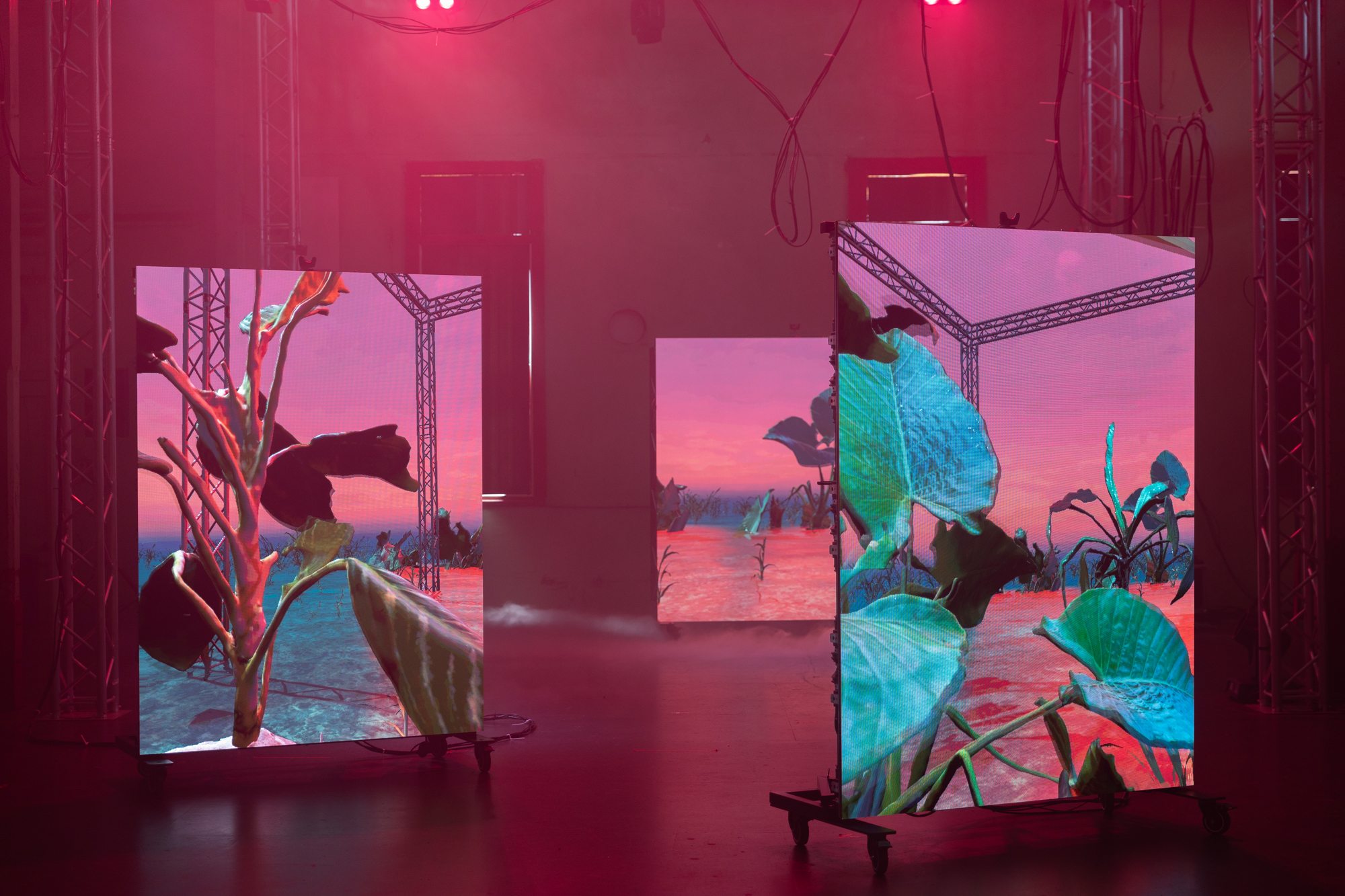
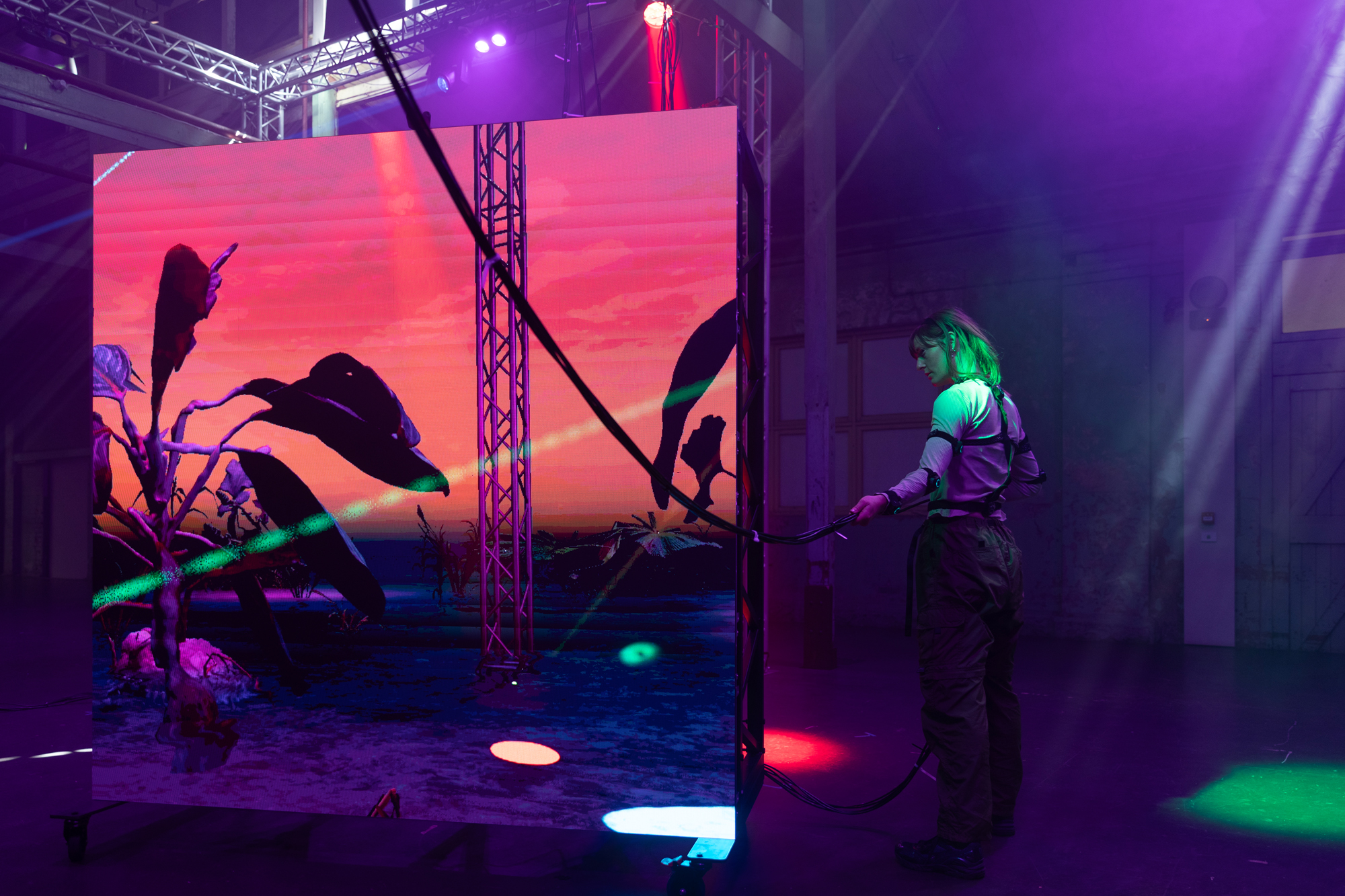
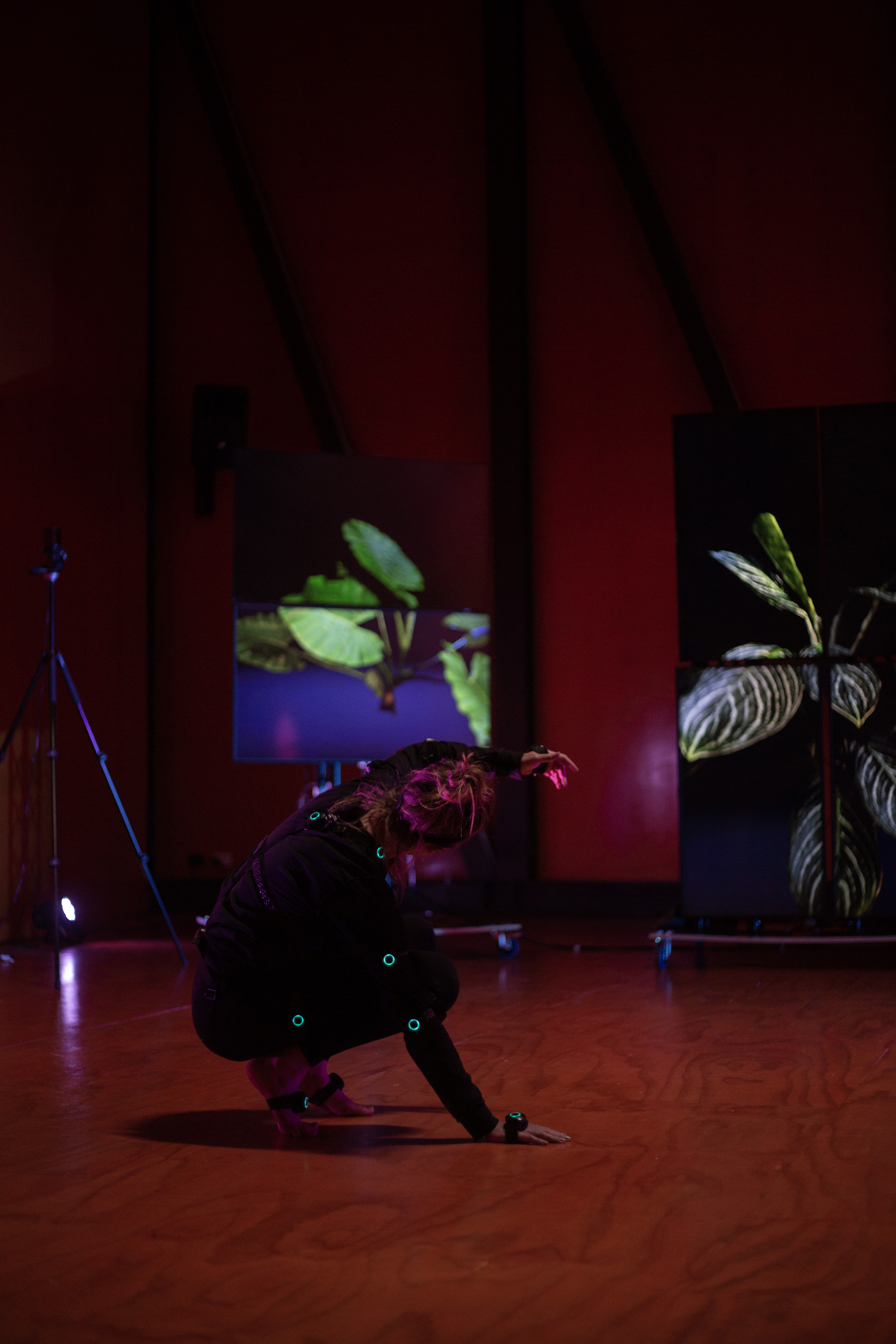
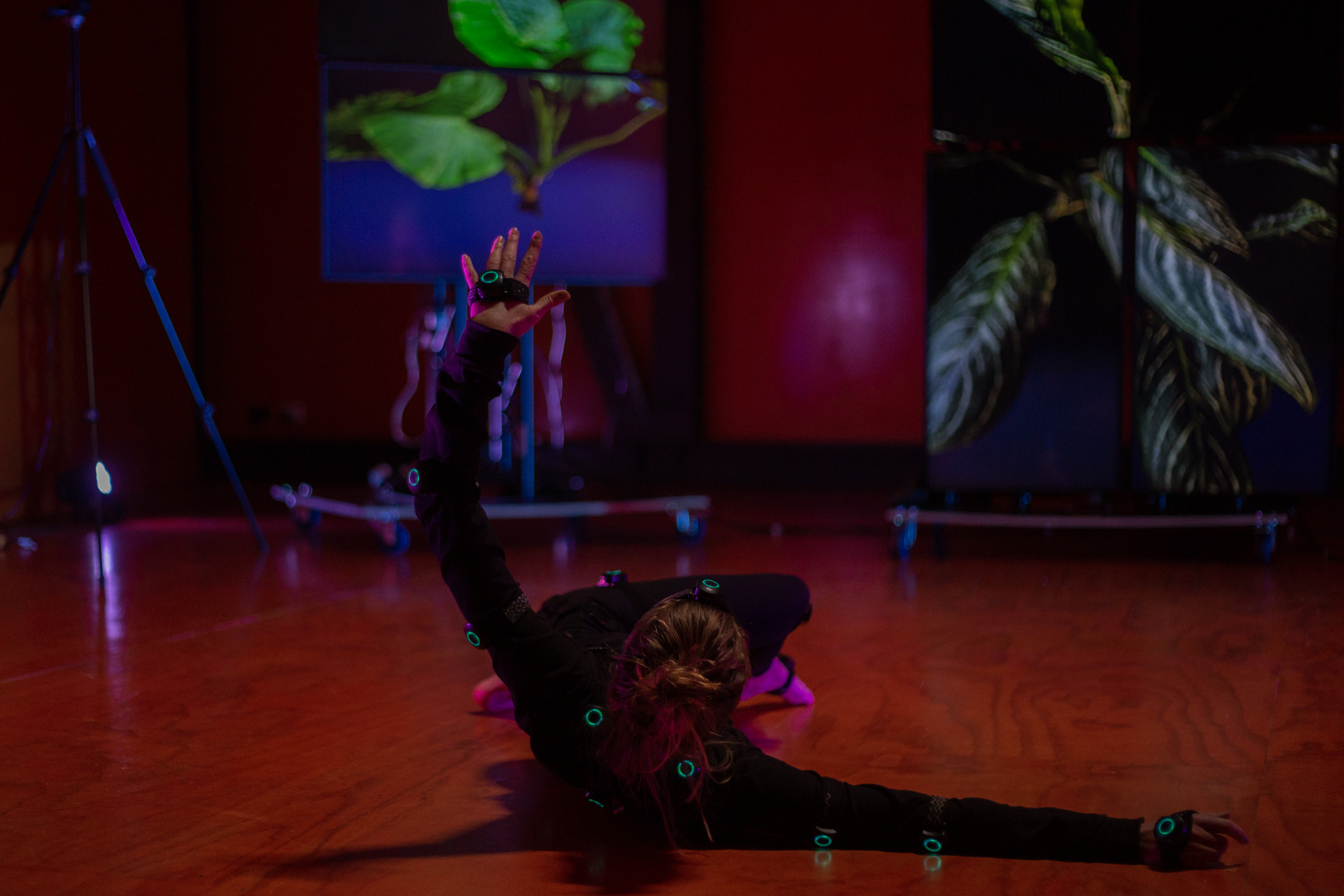
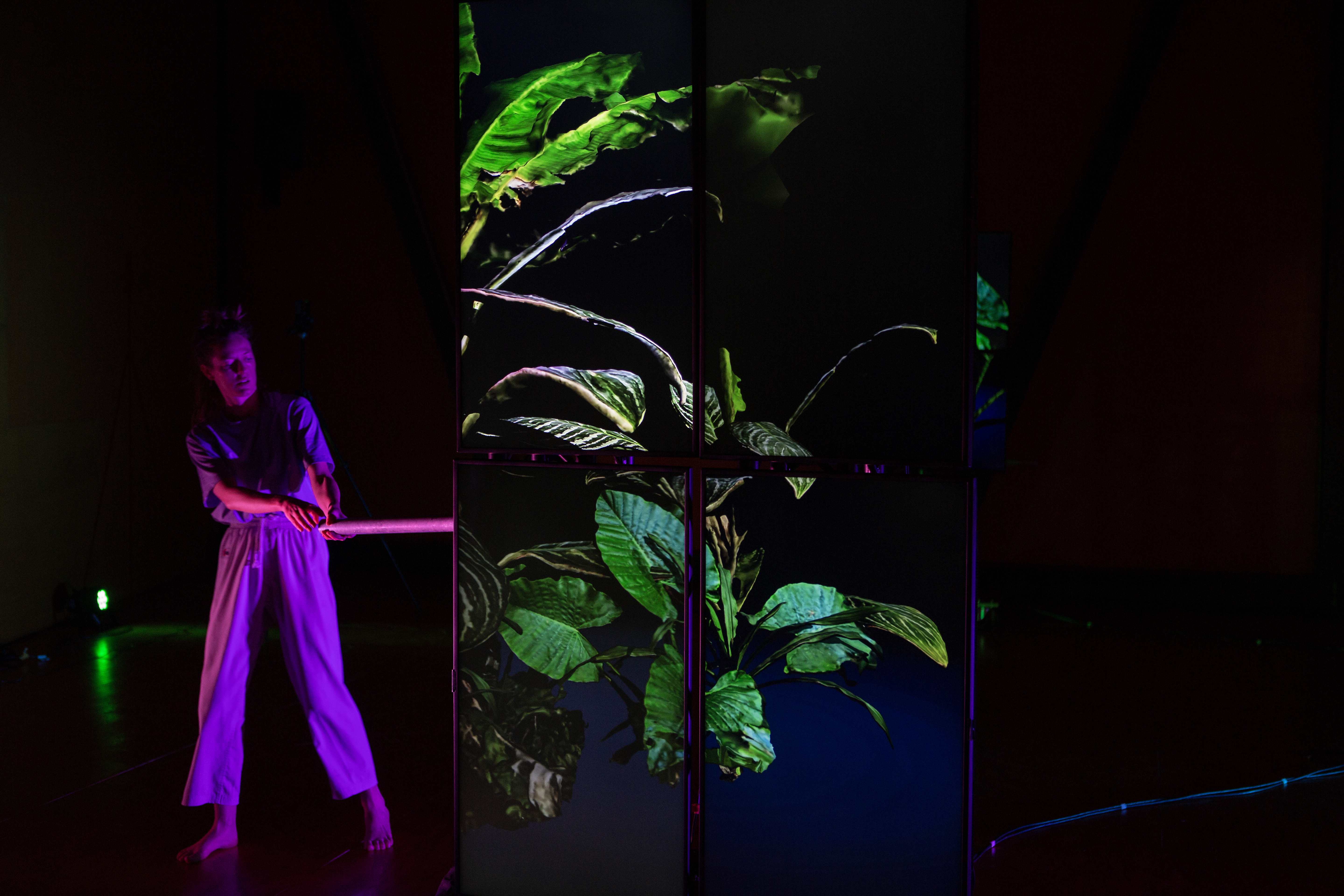
Ecological Adaptation is a transdisciplinary installation and durational performance exploring the interconnection between humans, non-humans, and technology. Composed of three custom-built moving LED screens, two performers, and live real-time activation, the work creates an environment in which human movement, natural systems, and computational processes share agency.
The installation forms an entangled space where audience members are immersed within the environment, surrounded by layers of technology, performance, and ecological imagery that coexist and respond to one another. Combining motion capture, real-time activation, responsive sound and lighting, and environmental data, the work positions technology not as a tool of control but as an active collaborator.
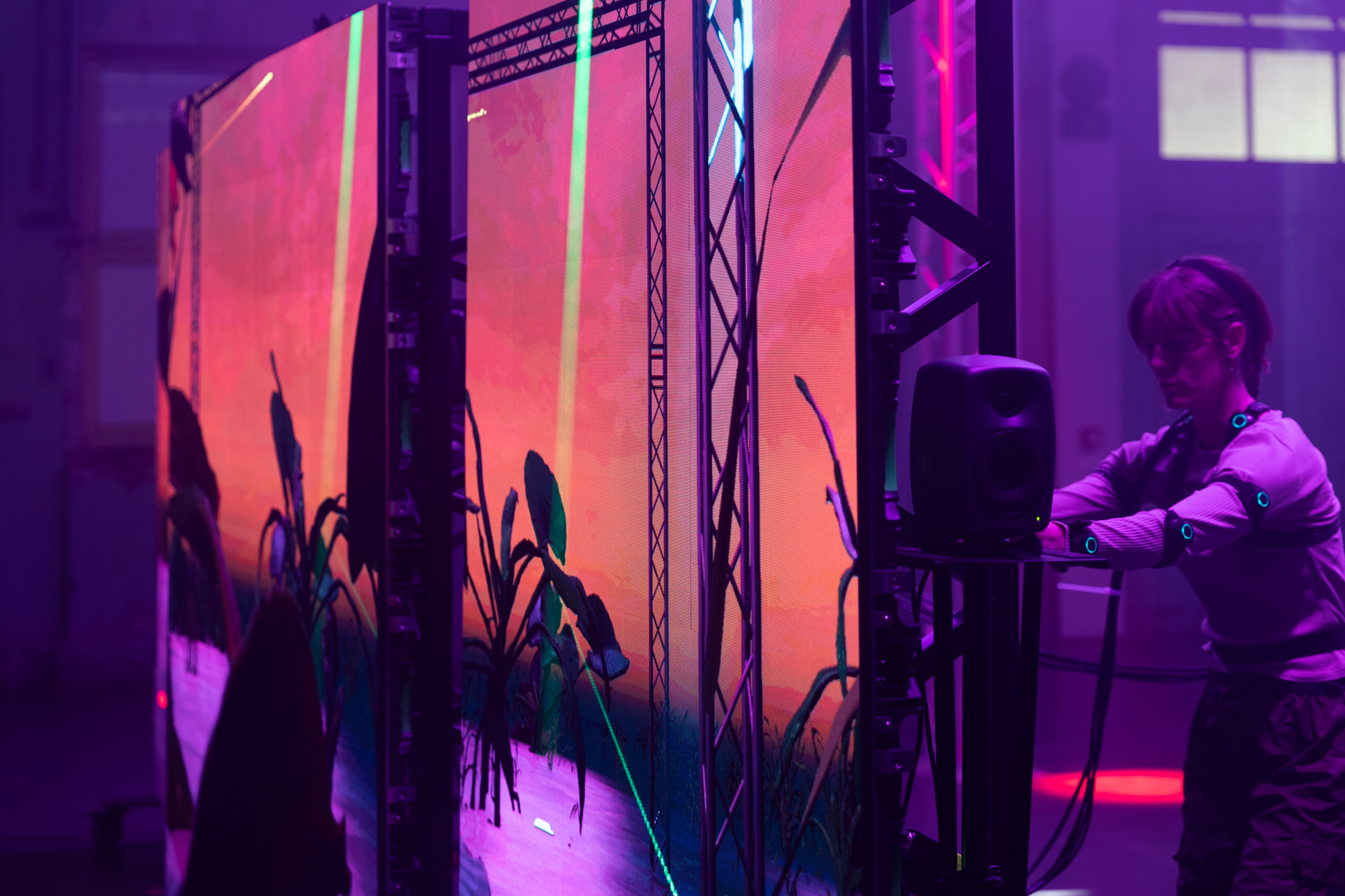
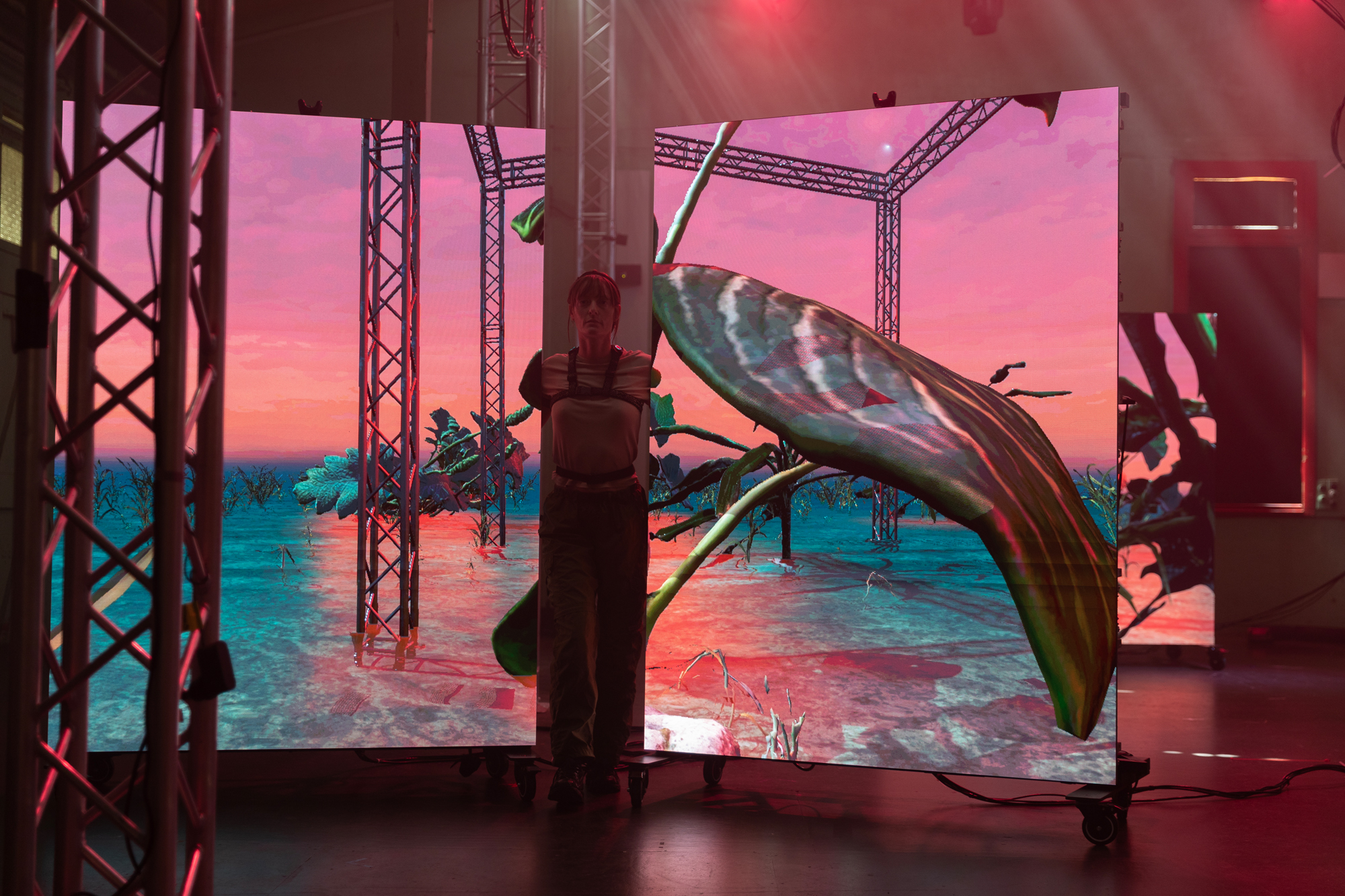
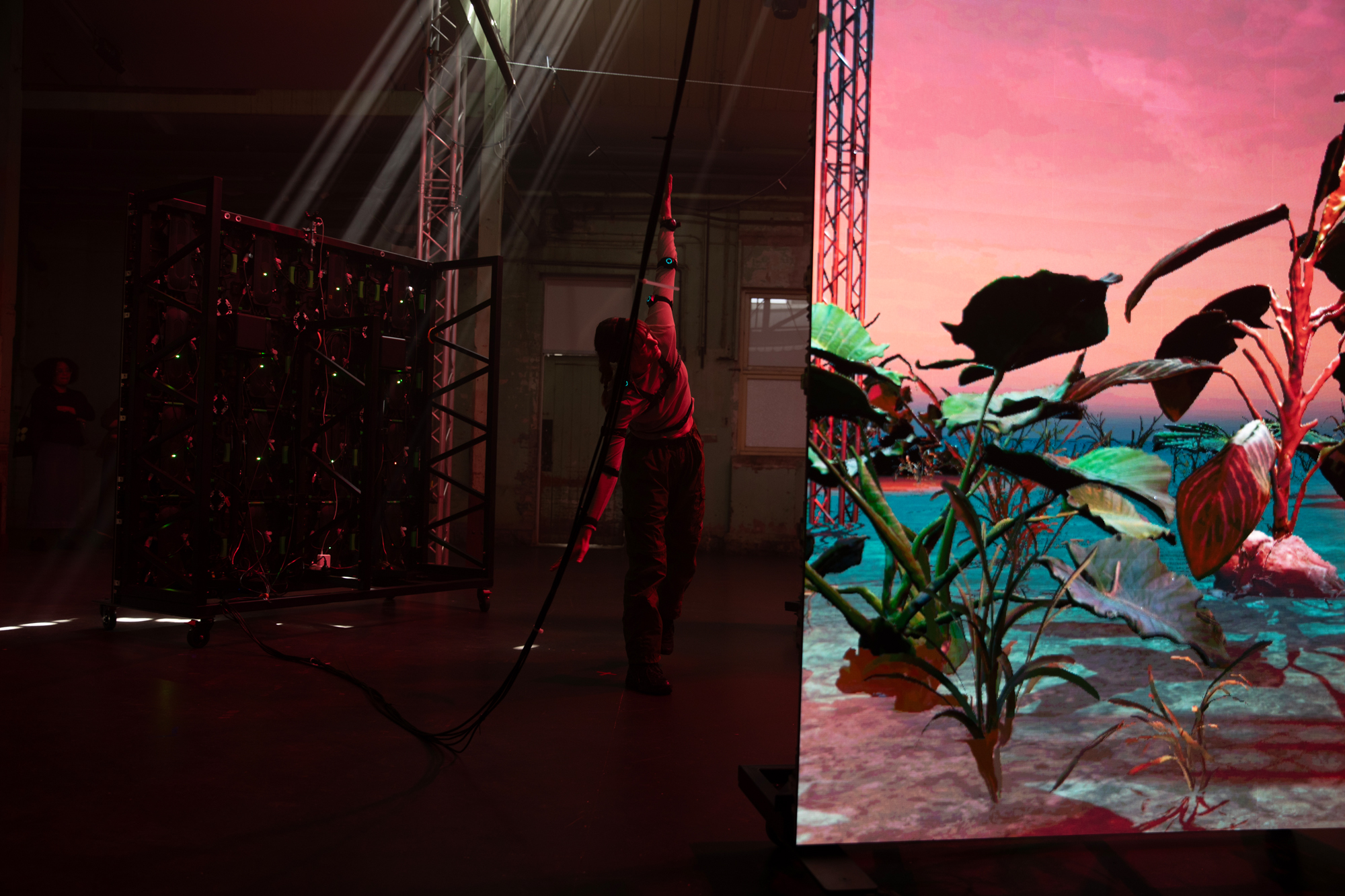
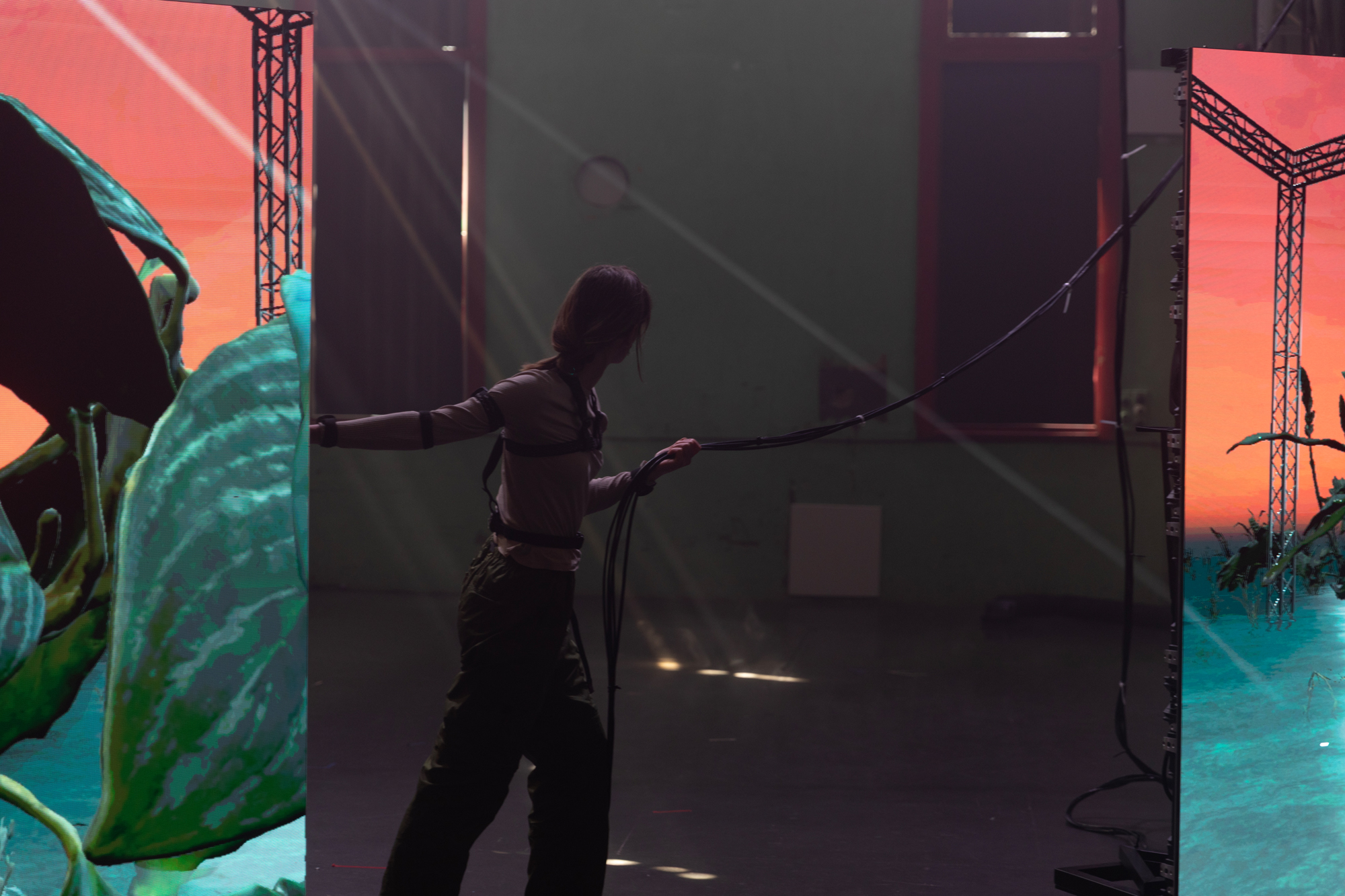
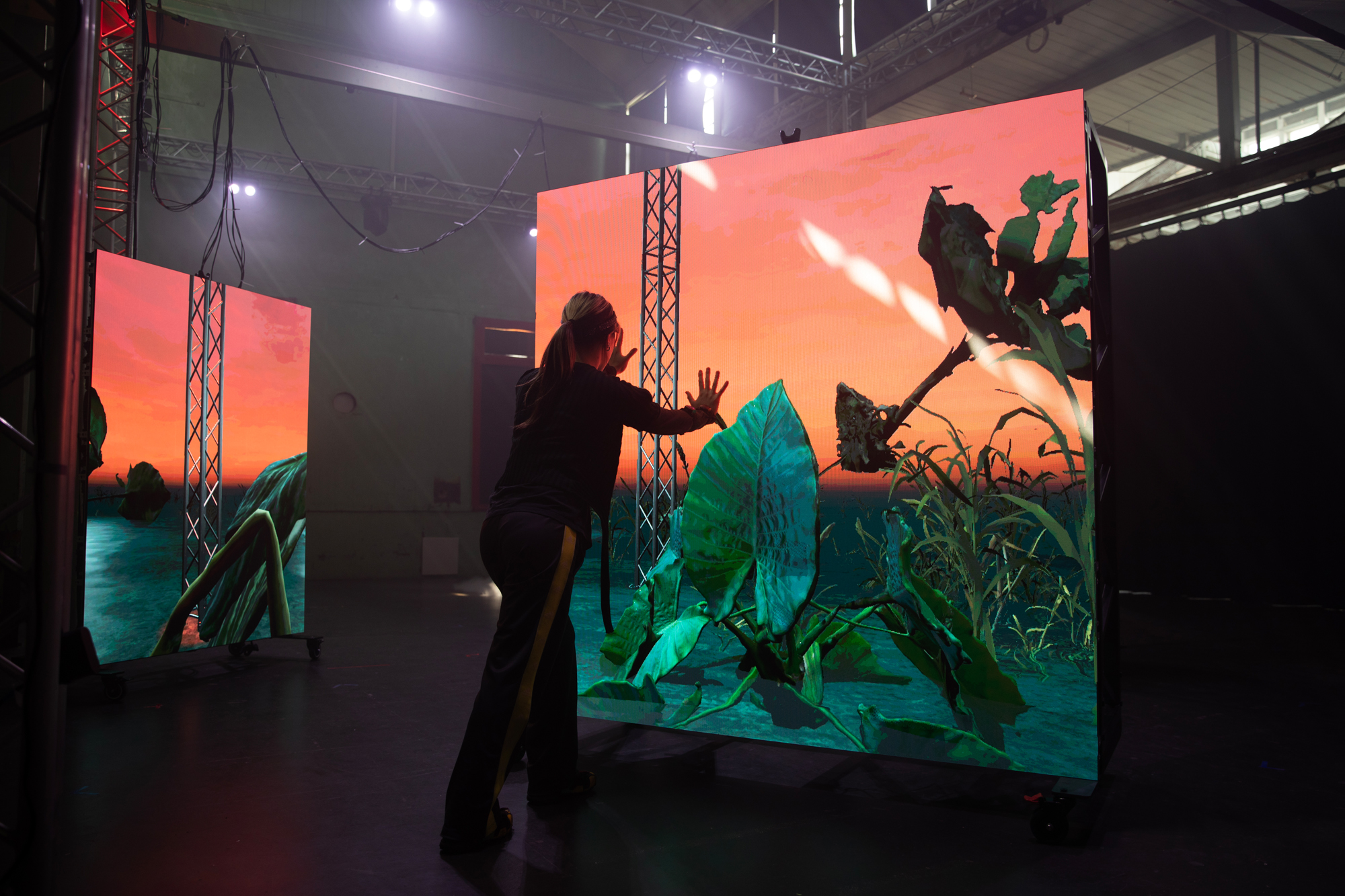
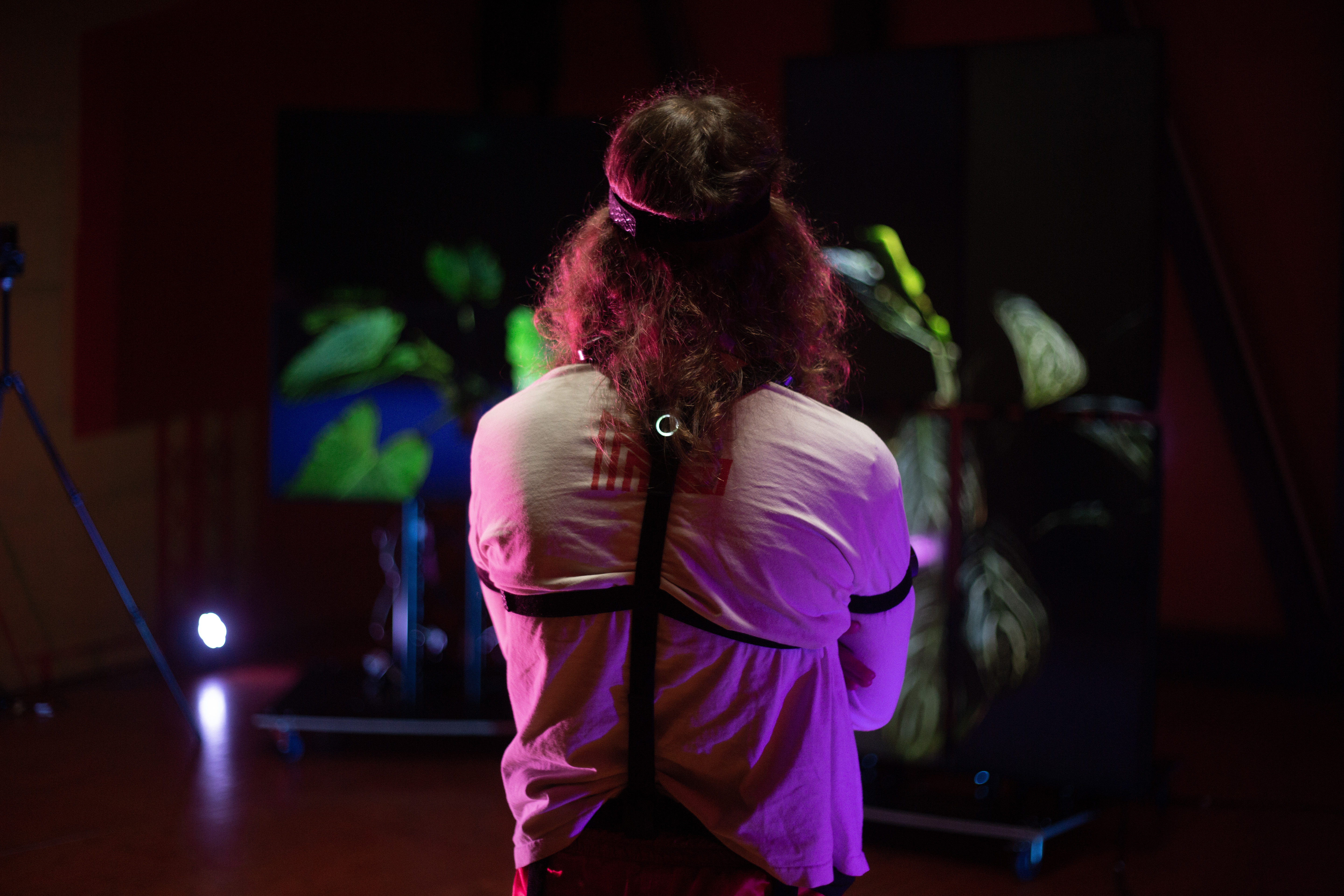
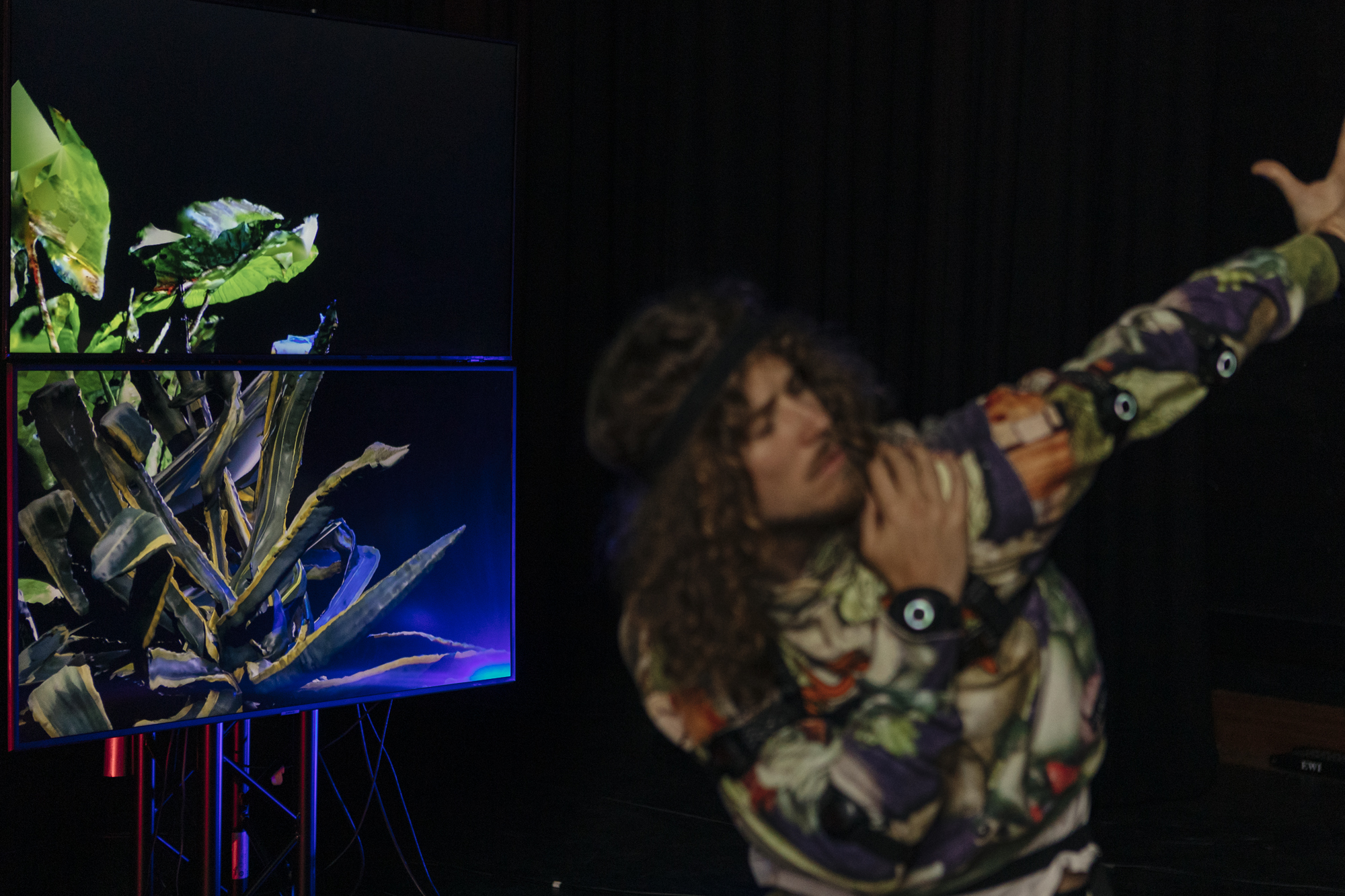
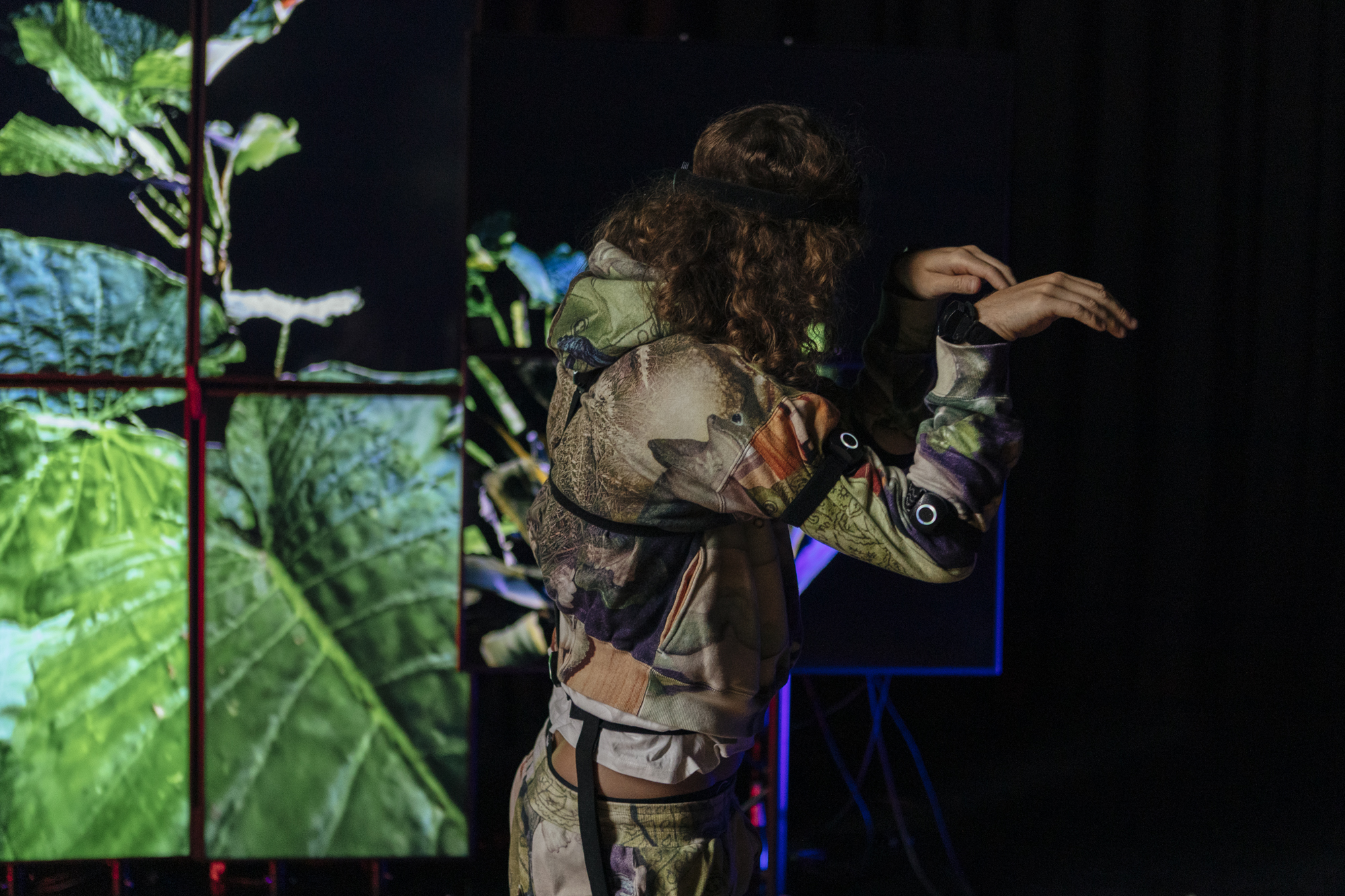
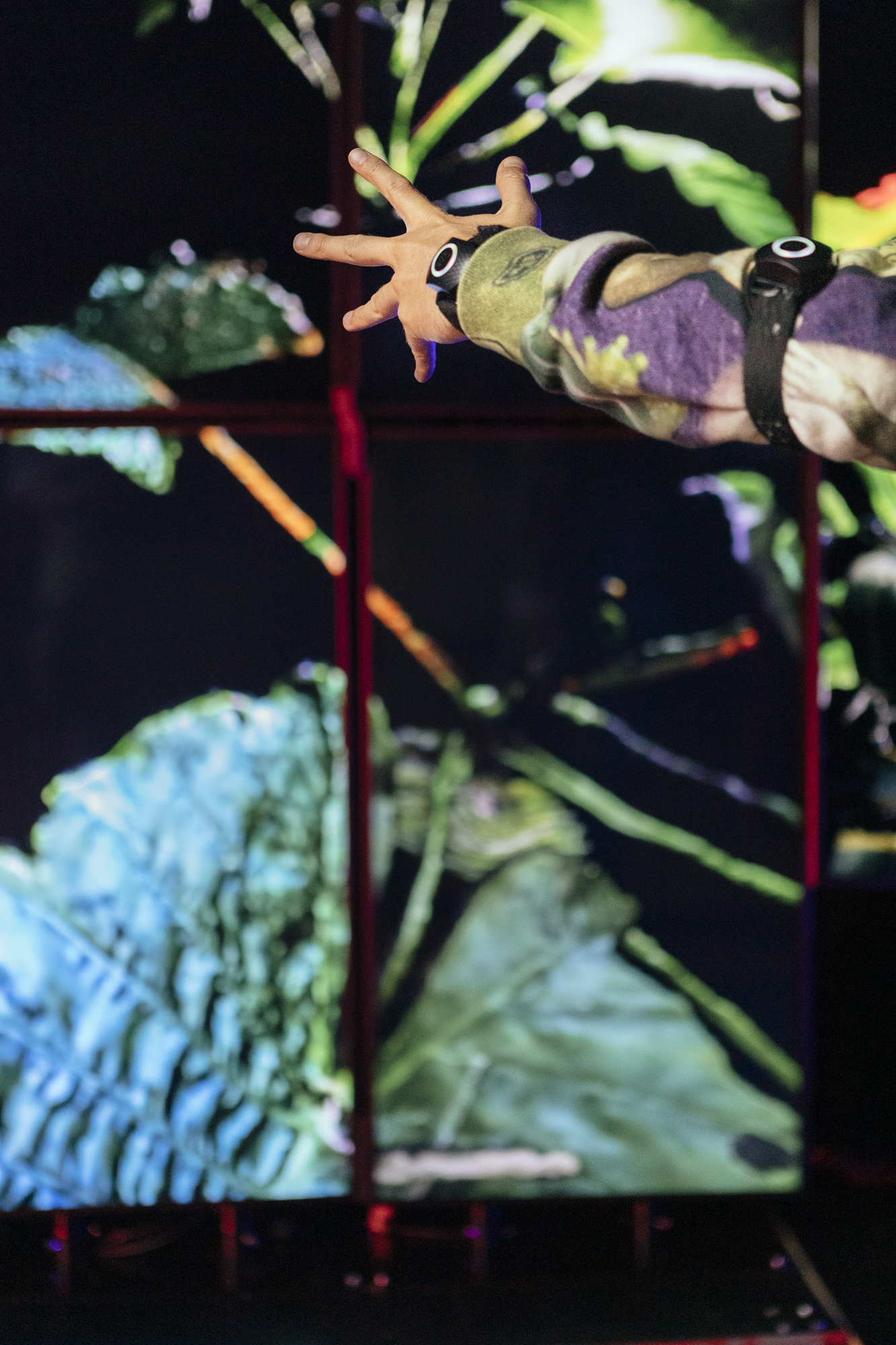
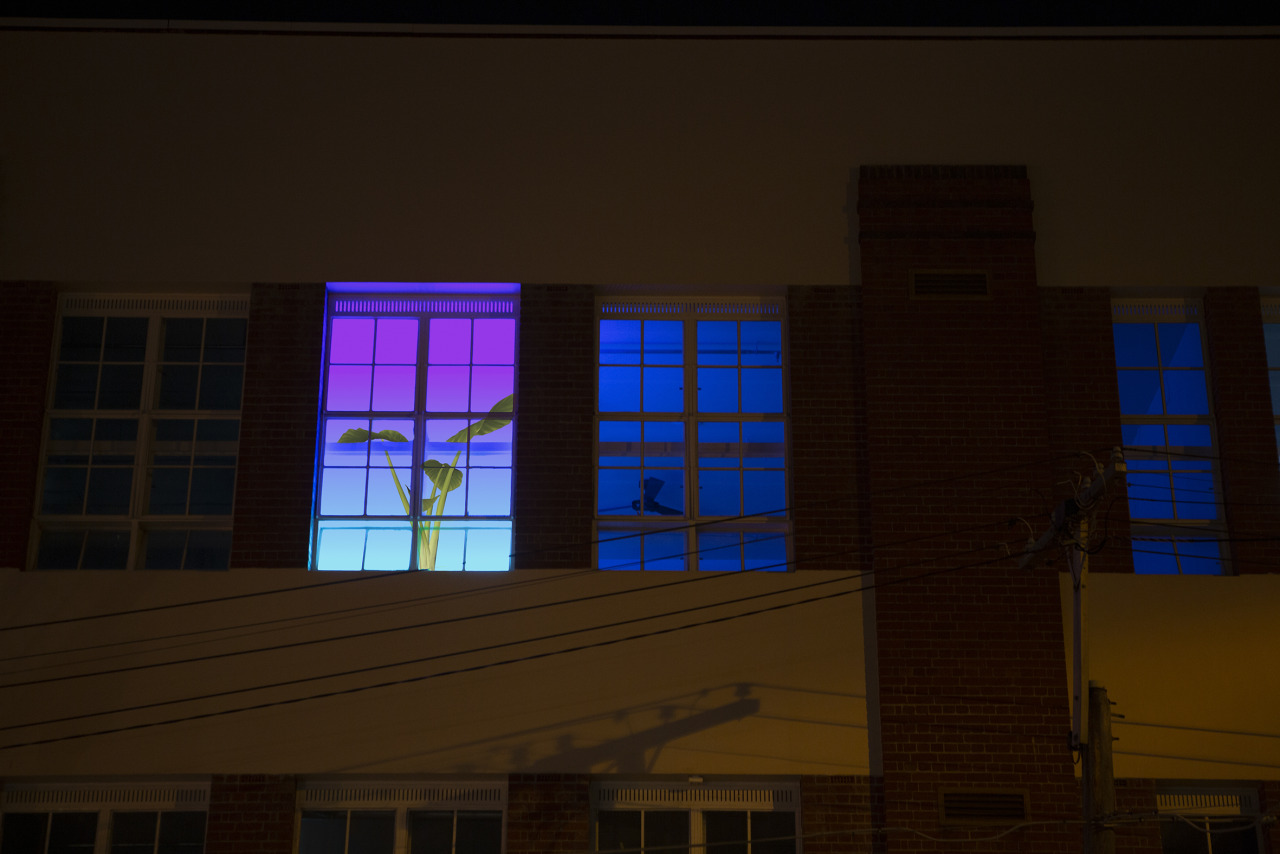
Motion capture data streamed from the performers animates virtual plant life, while recorded environmental data shifts sound and lighting, human movement informs details of live sound sonically shifting it through the space, and lighting connects the actual and virtual. These dynamic feedback loops create a continually evolving ecosystem, an interdependent choreography of human, nonhuman, and machinic forces. The custom moving LED screens act as portals between physical and digital realms, tracking through the scene using spatial trackers.
PROCESS
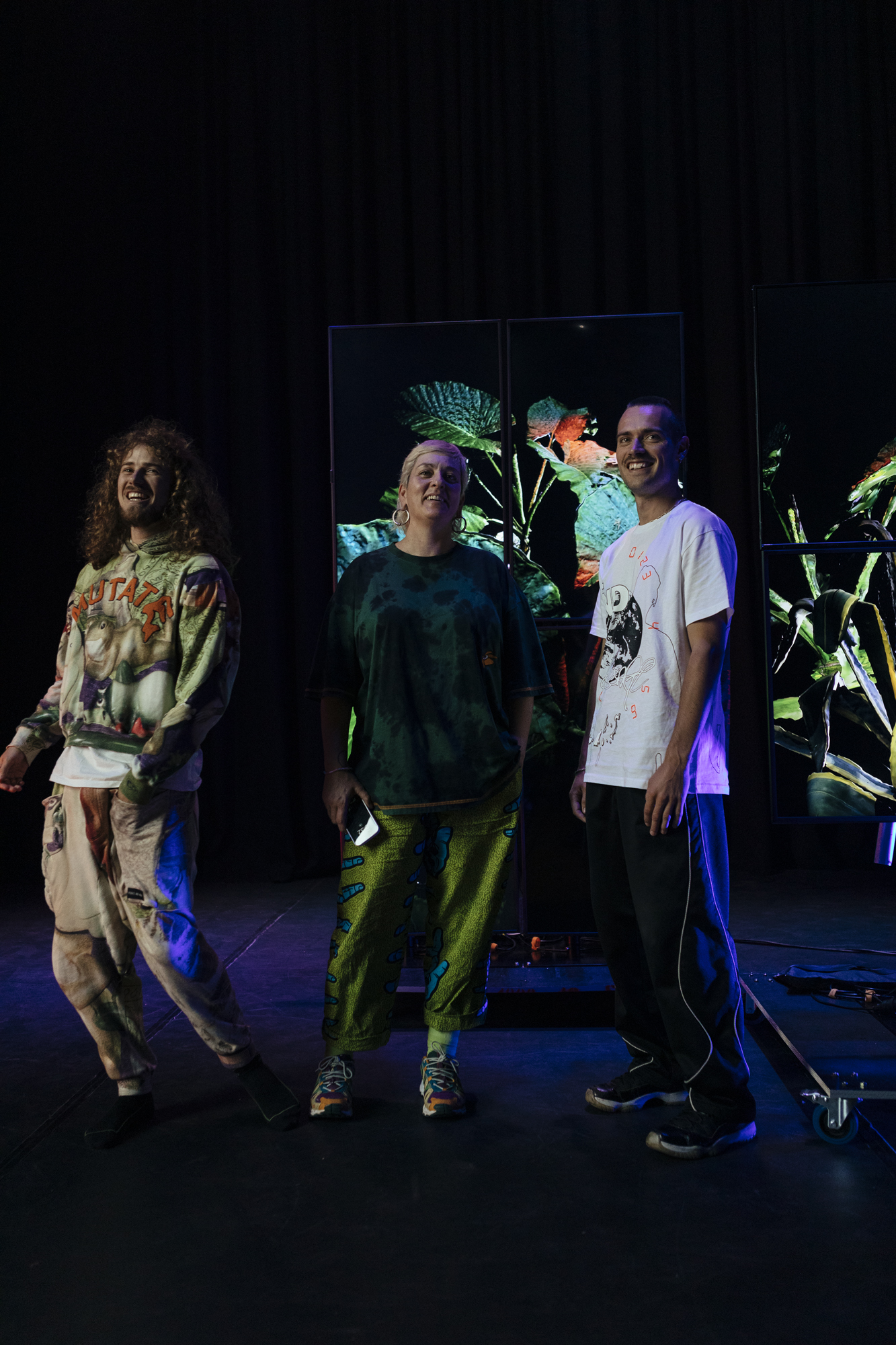
“Ecological Adaptation” builds on a long-term collaboration between lead artist Yandell Walton, digital choreographer Harrison Hall, and a creative team including Real-Time artist Liam Somerville, sound artist Patty Preece, lighting designer Nick Moloney, and performers Tara Jade Samaya & Damian Meredith.
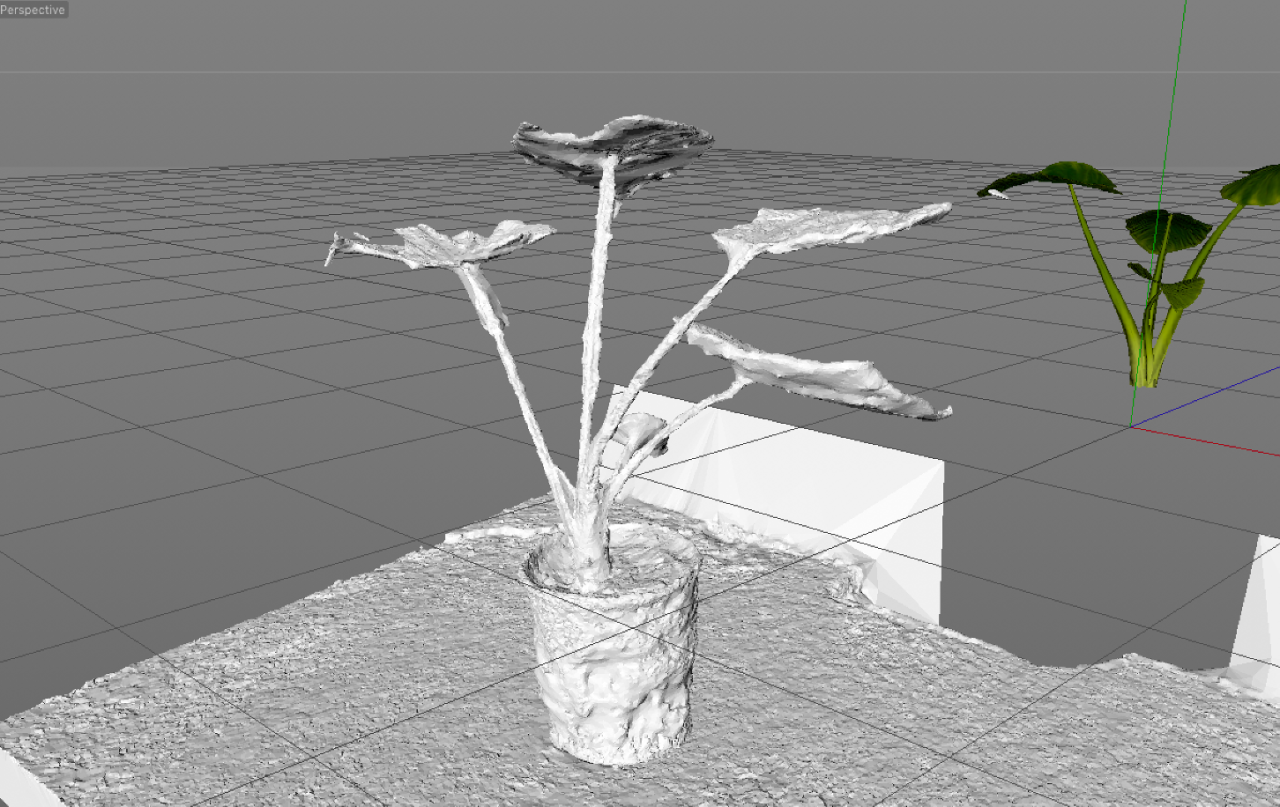
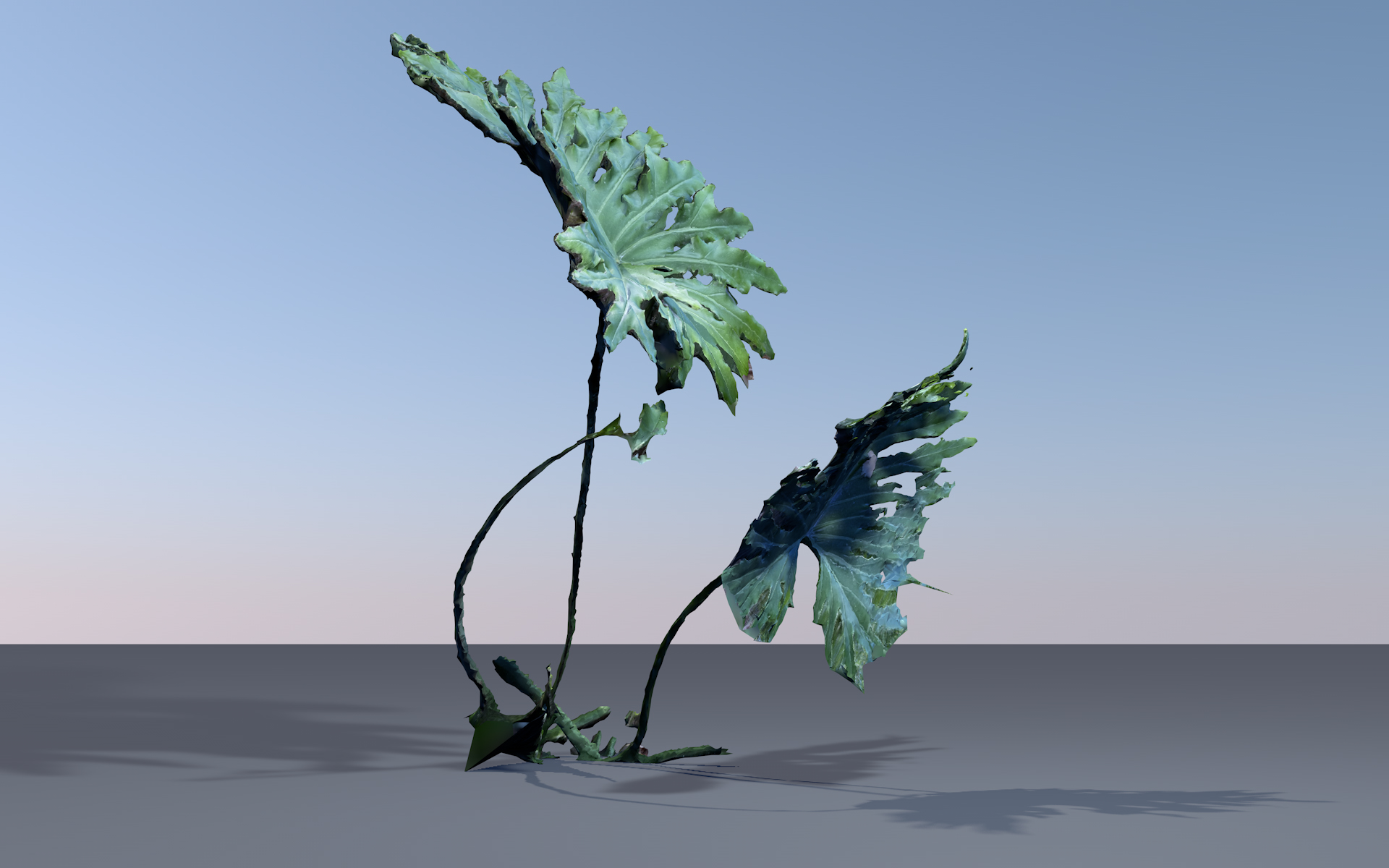
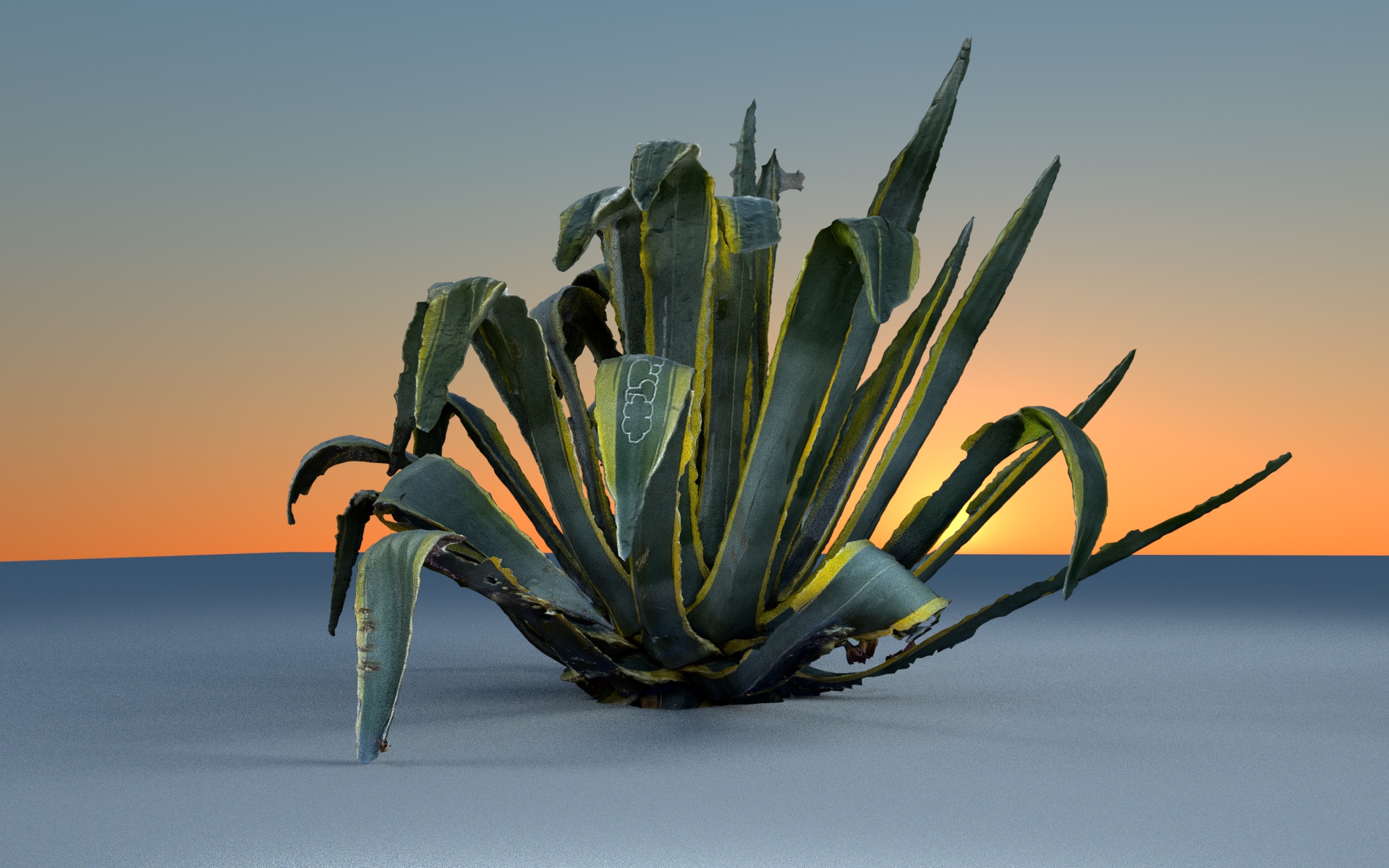
To create the 3D-modelled plant life, Yandell uses various plant species as references and utilises photogrammetry and 3D modelling software to produce realistic-looking plants. These were gathered in vulnerable forest ecosystems including the Amazon and Daintree Rainforest
The project explores entangled agencies across human and nonhuman domains. Technologies such as real-time game engines and technological tools are not treated as passive mediators but as active collaborators. Environmental elements like wind and light fluctuations are co-creators, influencing aesthetic outputs through their movements. These elements form dynamic feedback loops (Is this correct) that are both unique and continually evolving, with shared agency.
![]()
In Ecological Adaptation, the networking number 255.255.255.0 functions as both a technical and conceptual framework for understanding interconnection. In computer networking, this subnet mask defines how devices communicate within a shared system, distinguishing between the collective (network) and the individual (host). Within this work, this concept mirrors the distributed relationships between human, nonhuman, and machinic agents.
By networking multiple computers, sensors, and technologies, we construct an ecosystem where each element operates as a host within a larger web of exchange. The subnet mask becomes a metaphor for ecological entanglement: it marks boundaries not as separations, but as zones of relation through which information, energy, and agency circulate.
![]()
![]()
![]()
![]()
![]()
![]()
![]()
![]()
This project has been assisted by the Australian Government through Creative Australia, its principal arts investment and advisory body.
Development October 2025, Abbotsford Convent
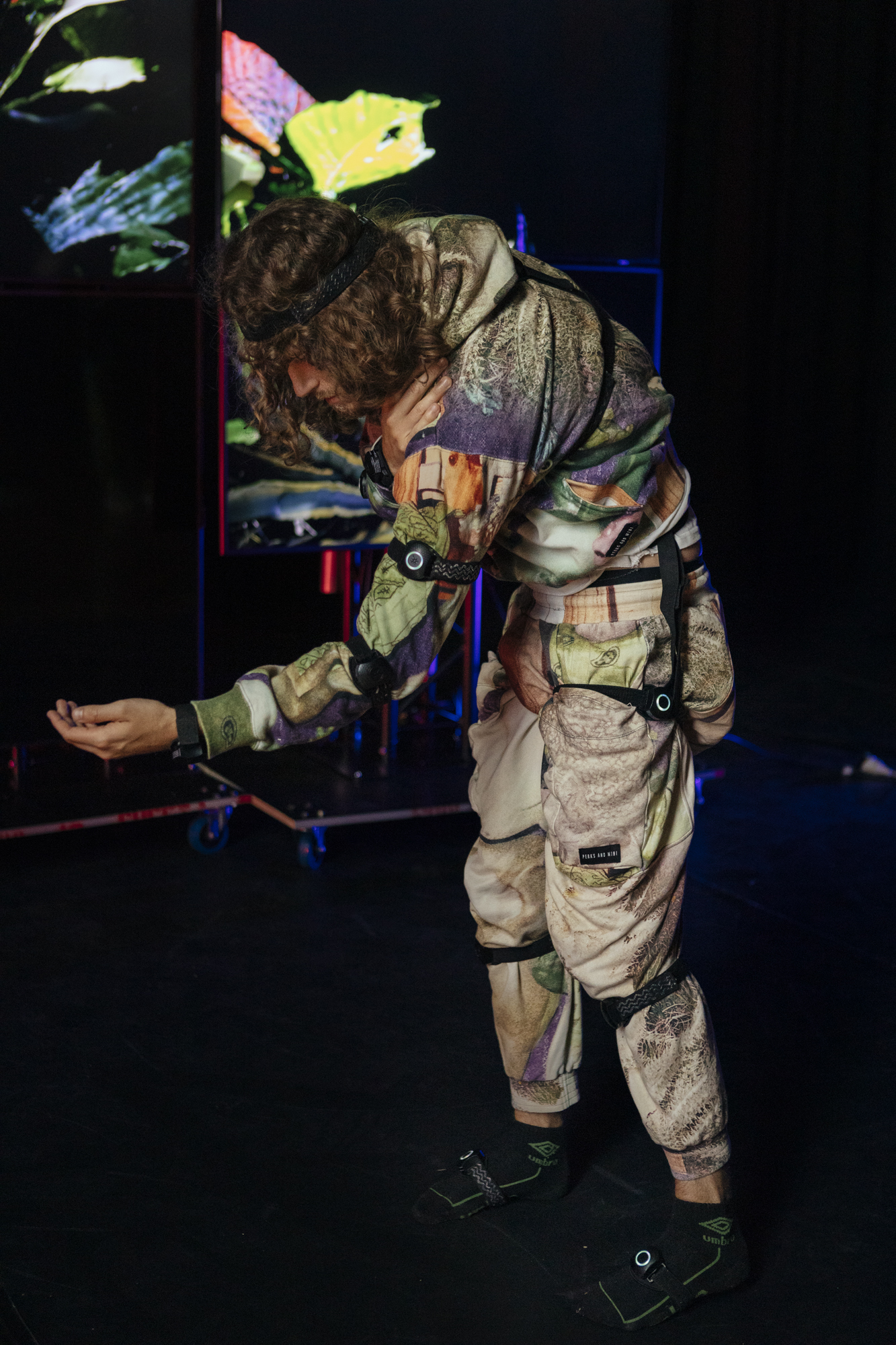
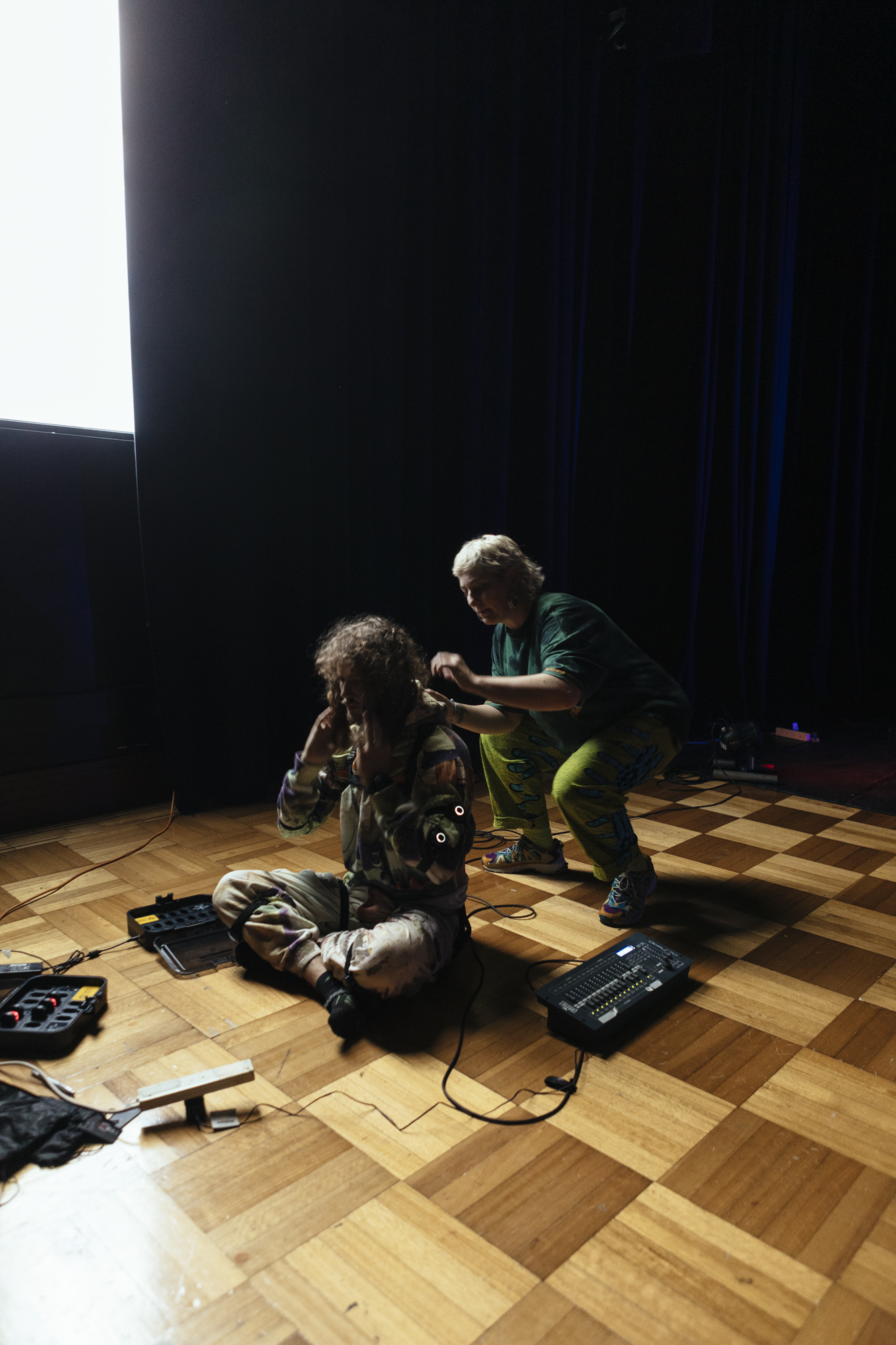
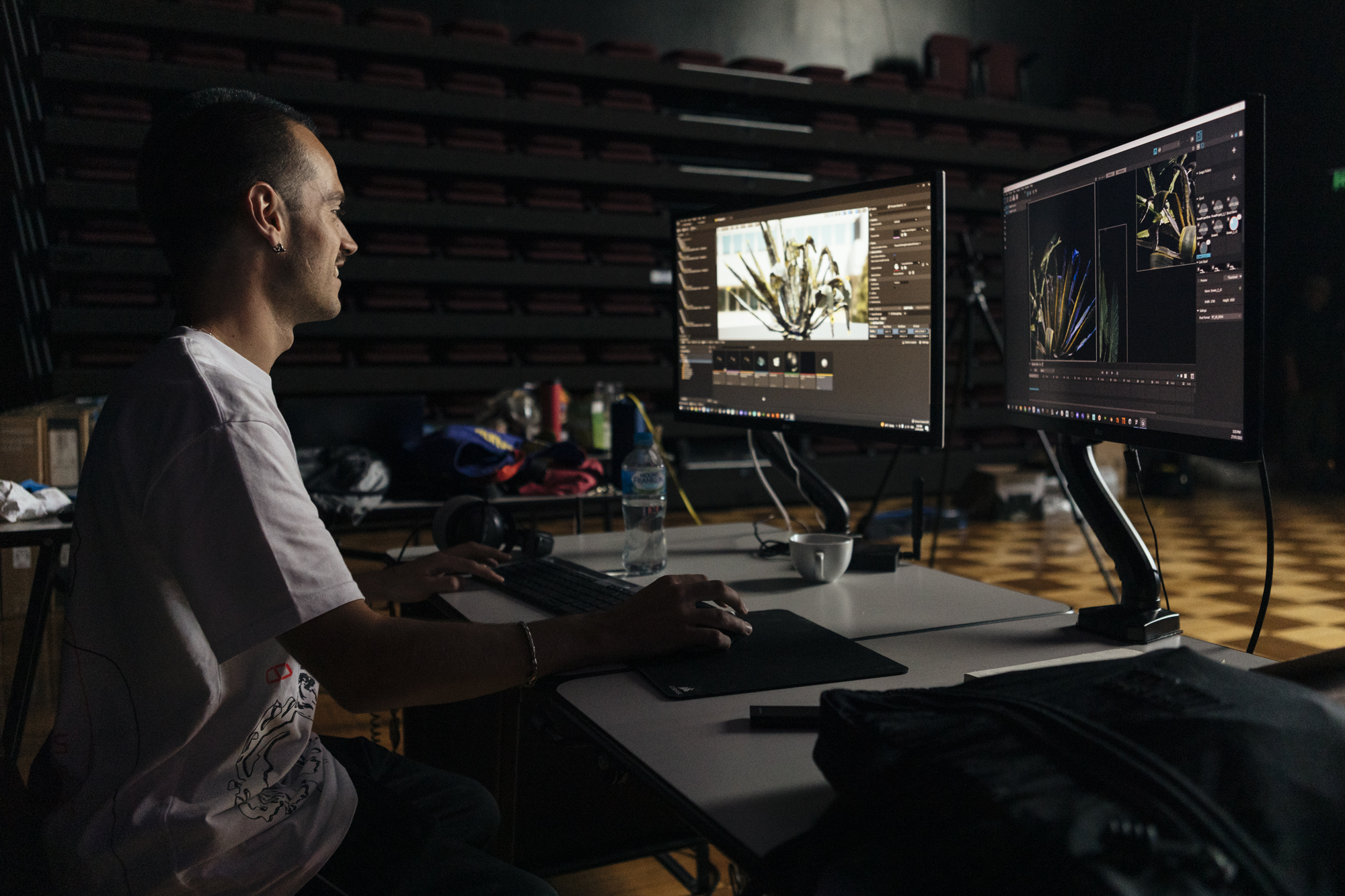
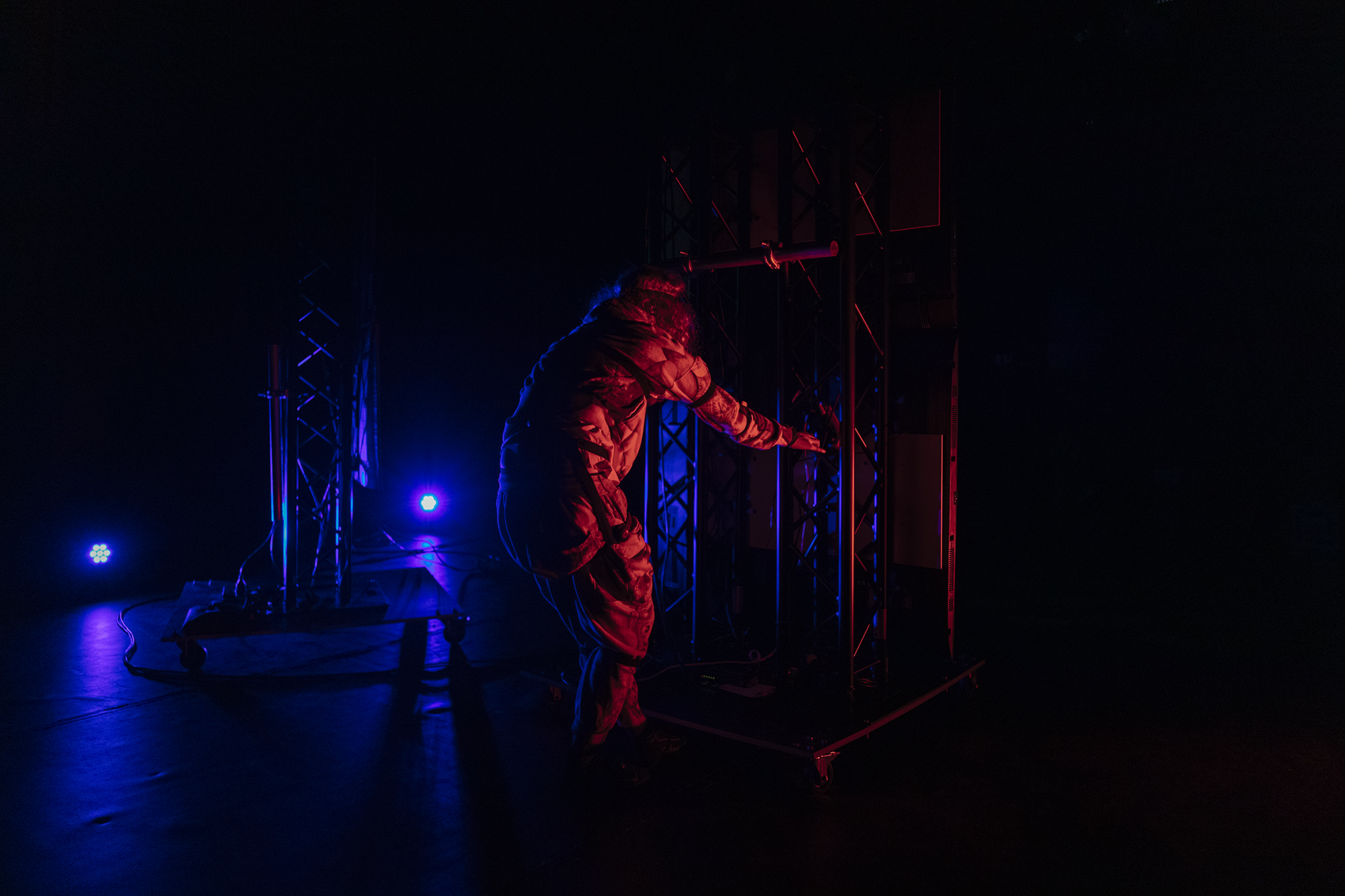
In this development, we focused on working with sound and light, merging the actual and virtual. We used the VIVE tracker to enable real-time movement of the screen in virtual space, acting like a portal. Using DMX we linked the actual lighting with the virtual lighting and enabled sound to trigger lights.
This development focused only on the Motion Capture / Human Movement
to the virtual plants.
Work in Development Project8, December 2023
Development and viewing at Meat Market, May 2023
![]()
![]()
![]()
![]()
![]()
![]()
![]()
![]()
Development Minimax residency at Chunky Move, May 2023
![]()
![]()
with Harrison Hall, Liam Somerville, Patty Preece, Nick Moloney, Andrew Treloar,
and performers Sarah Aiken, Tara Jade Samaya & Damian Meredith
Development has been supported by Creative Australia, Creative Victoria,
City of Melbourne, Platform Arts Geelong, Chunky Move Minimax Residency,
Phillip Hunter Fellowship, ANAT, Jim Marks Postgraduate Scholarship, and Abbotsford Convent.
WINTER:LIVE 2026, Abbotsford Convent


ABOUT
Ecological Adaptation is a transdisciplinary installation and durational performance exploring the interconnection between humans, non-humans, and technology. Composed of three custom-built moving LED screens, two performers, and live real-time activation, the work creates an environment in which human movement, natural systems, and computational processes share agency.
The installation forms an entangled space where audience members are immersed within the environment, surrounded by layers of technology, performance, and ecological imagery that coexist and respond to one another. Combining motion capture, real-time activation, responsive sound and lighting, and environmental data, the work positions technology not as a tool of control but as an active collaborator.
Motion capture data streamed from the performers animates virtual plant life, while recorded environmental data shifts sound and lighting, human movement informs details of live sound sonically shifting it through the space, and lighting connects the actual and virtual. These dynamic feedback loops create a continually evolving ecosystem, an interdependent choreography of human, nonhuman, and machinic forces. The custom moving LED screens act as portals between physical and digital realms, tracking through the scene using spatial trackers.
PROCESS
“Ecological Adaptation” builds on a long-term collaboration between lead artist Yandell Walton, digital choreographer Harrison Hall, and a creative team including Real-Time artist Liam Somerville, sound artist Patty Preece, lighting designer Nick Moloney, and performers Tara Jade Samaya & Damian Meredith.
To create the 3D-modelled plant life, Yandell uses various plant species as references and utilises photogrammetry and 3D modelling software to produce realistic-looking plants. These were gathered in vulnerable forest ecosystems including the Amazon and Daintree Rainforest
Reimagining Agency
The project explores entangled agencies across human and nonhuman domains. Technologies such as real-time game engines and technological tools are not treated as passive mediators but as active collaborators. Environmental elements like wind and light fluctuations are co-creators, influencing aesthetic outputs through their movements. These elements form dynamic feedback loops (Is this correct) that are both unique and continually evolving, with shared agency.

In Ecological Adaptation, the networking number 255.255.255.0 functions as both a technical and conceptual framework for understanding interconnection. In computer networking, this subnet mask defines how devices communicate within a shared system, distinguishing between the collective (network) and the individual (host). Within this work, this concept mirrors the distributed relationships between human, nonhuman, and machinic agents.
By networking multiple computers, sensors, and technologies, we construct an ecosystem where each element operates as a host within a larger web of exchange. The subnet mask becomes a metaphor for ecological entanglement: it marks boundaries not as separations, but as zones of relation through which information, energy, and agency circulate.
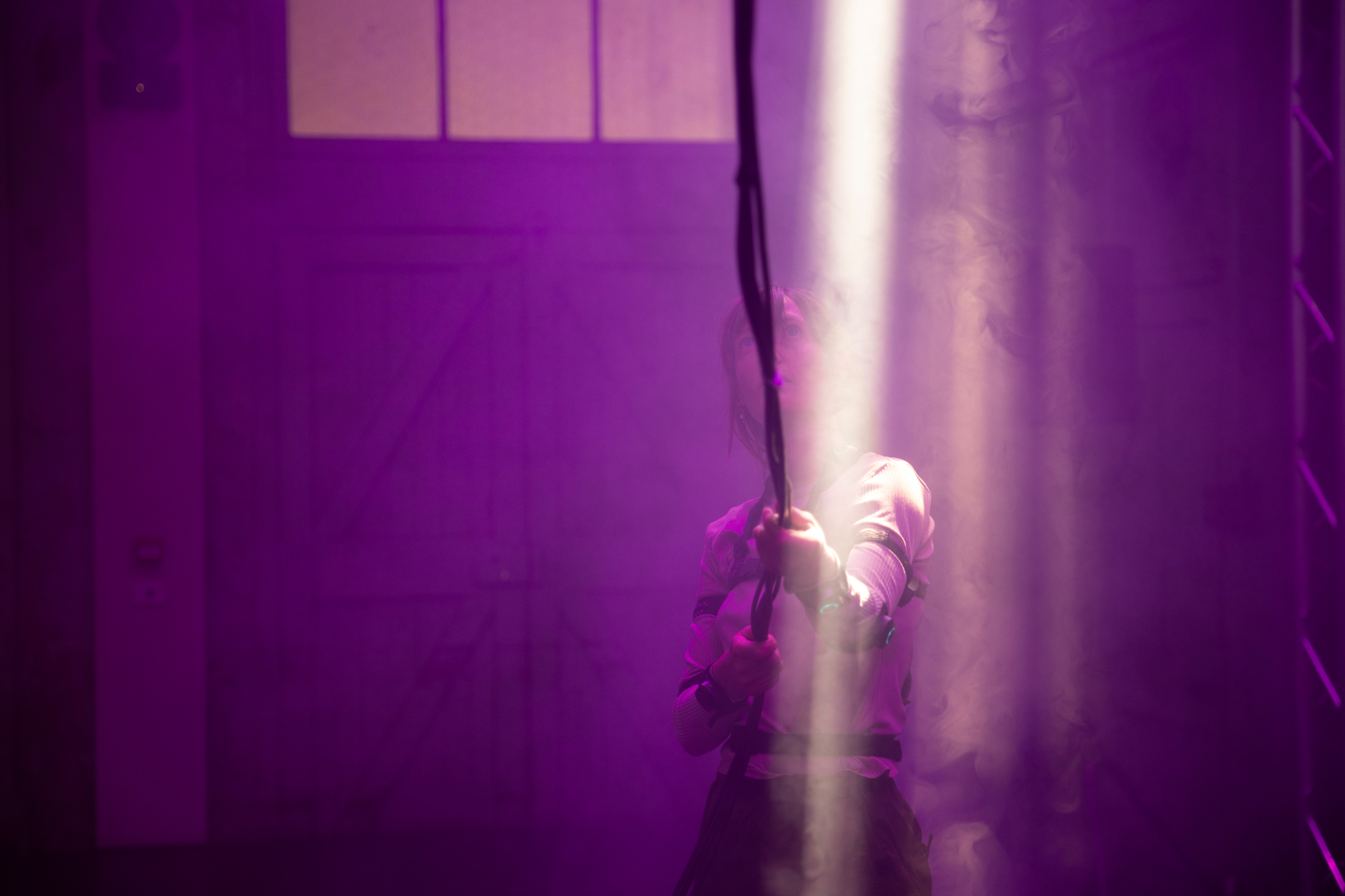
Development November 2025, Abbotsford Convent
This project has been assisted by the Australian Government through Creative Australia, its principal arts investment and advisory body.
Development October 2025, Abbotsford Convent
In this development, we focused on working with sound and light, merging the actual and virtual. We used the VIVE tracker to enable real-time movement of the screen in virtual space, acting like a portal. Using DMX we linked the actual lighting with the virtual lighting and enabled sound to trigger lights.
This development focused only on the Motion Capture / Human Movement
to the virtual plants.
Work in Development Project8, December 2023
Development and viewing at Meat Market, May 2023

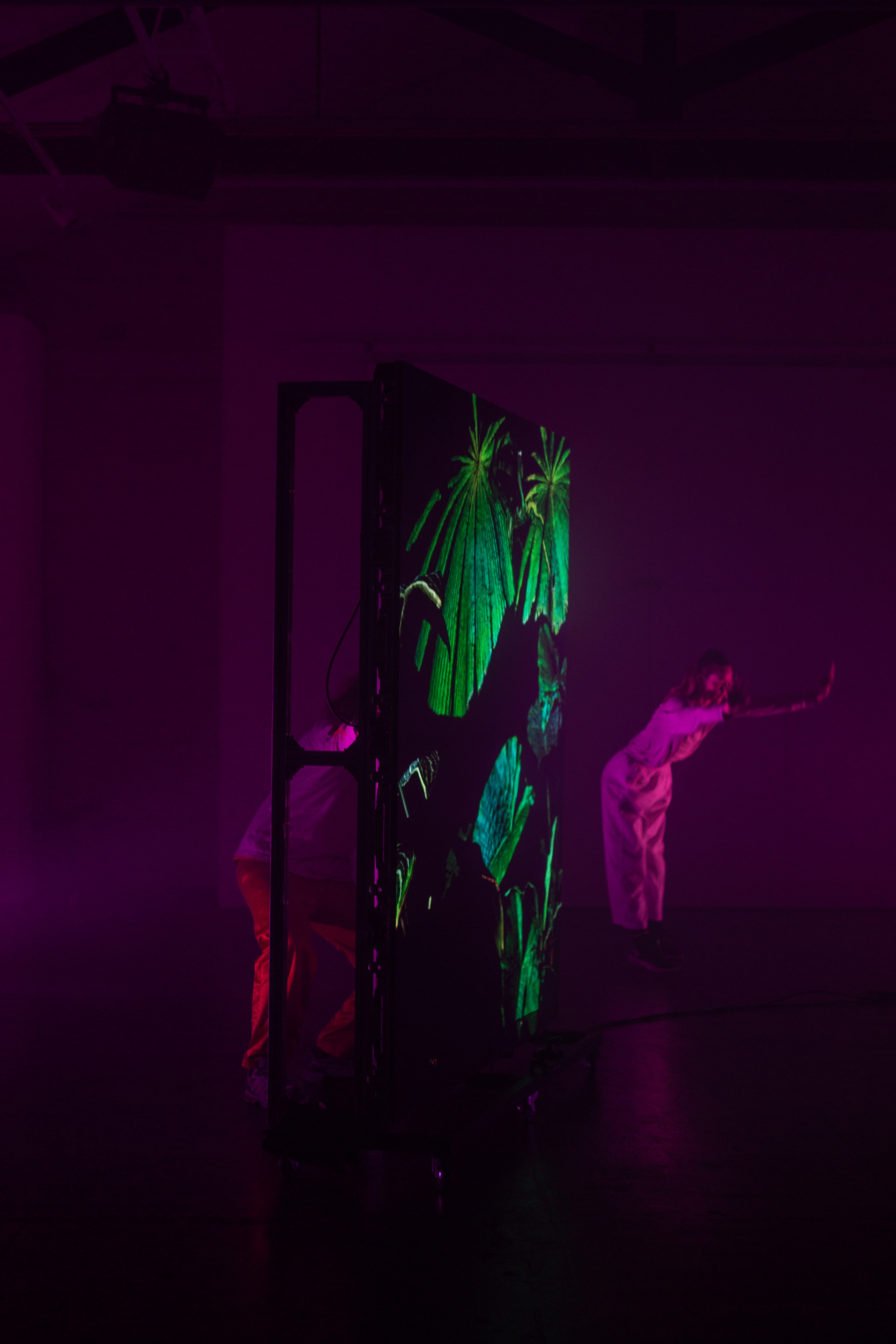

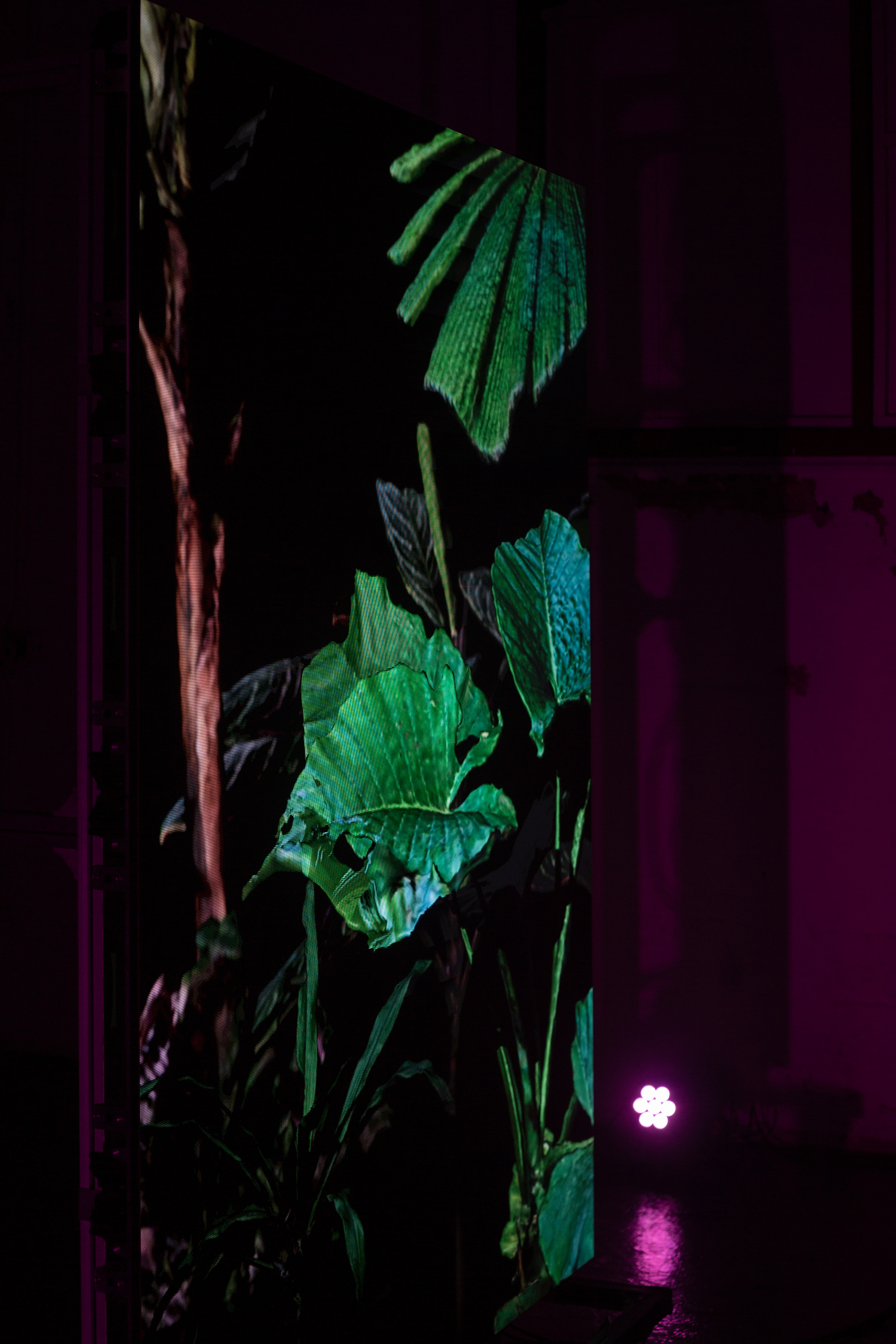
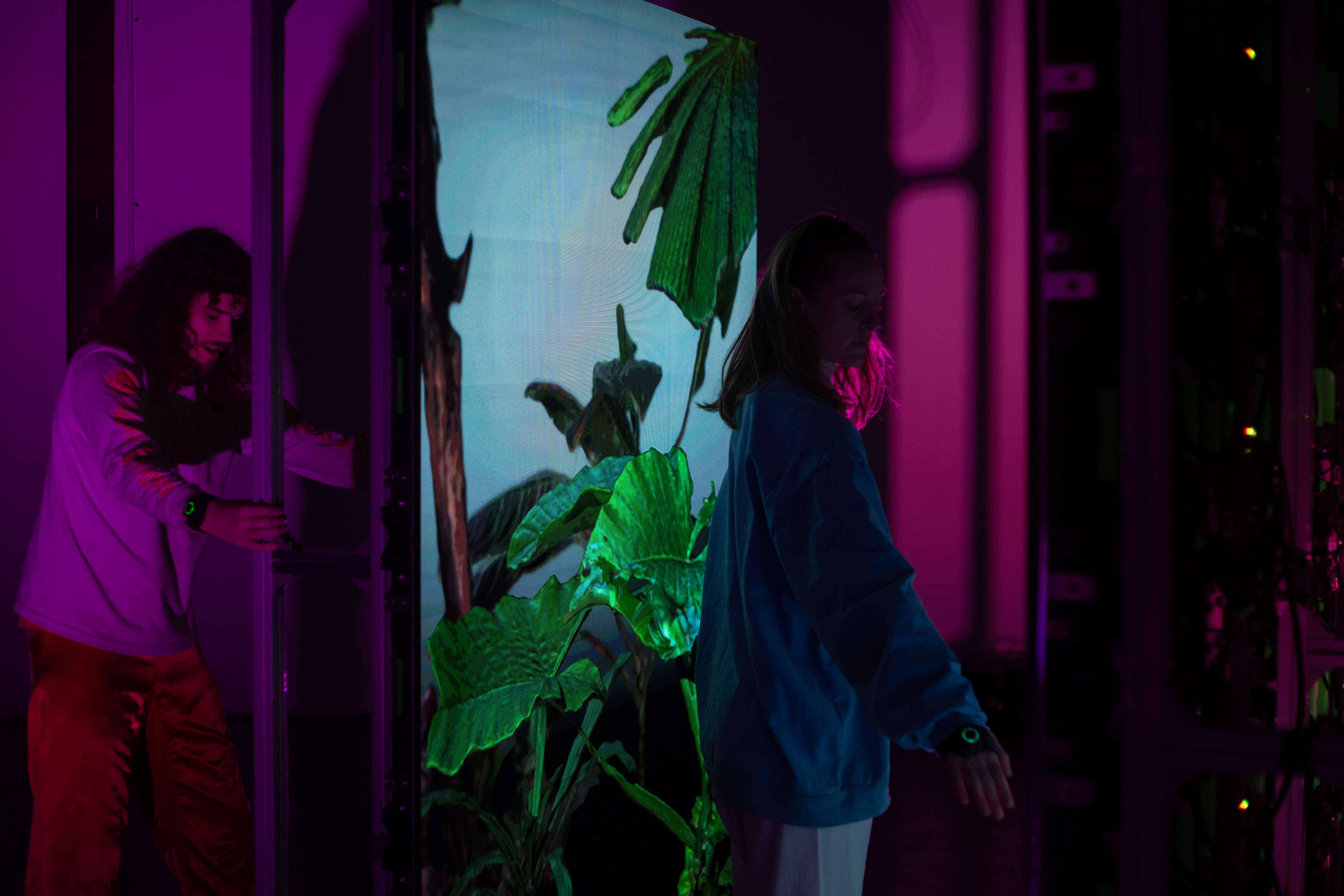
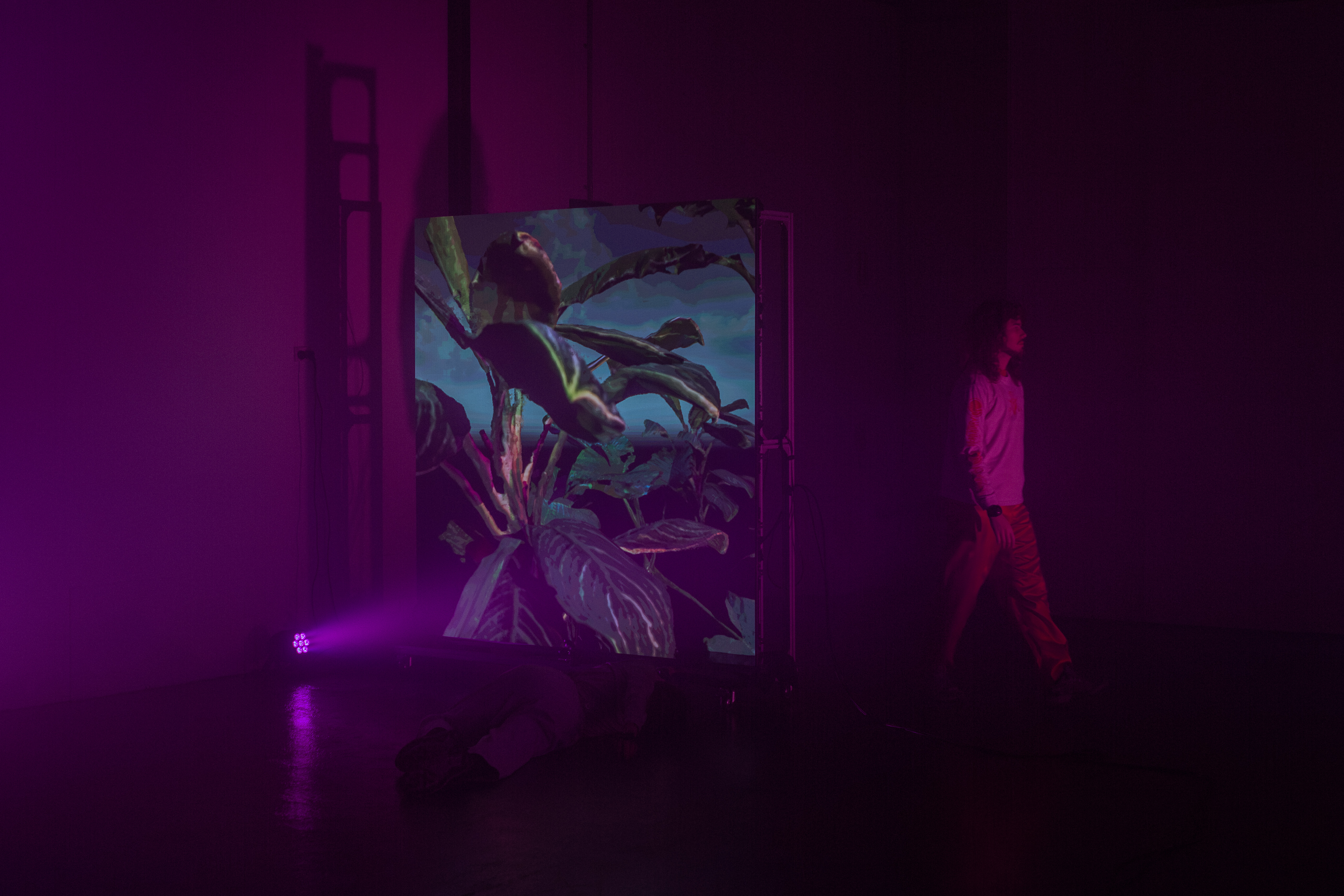

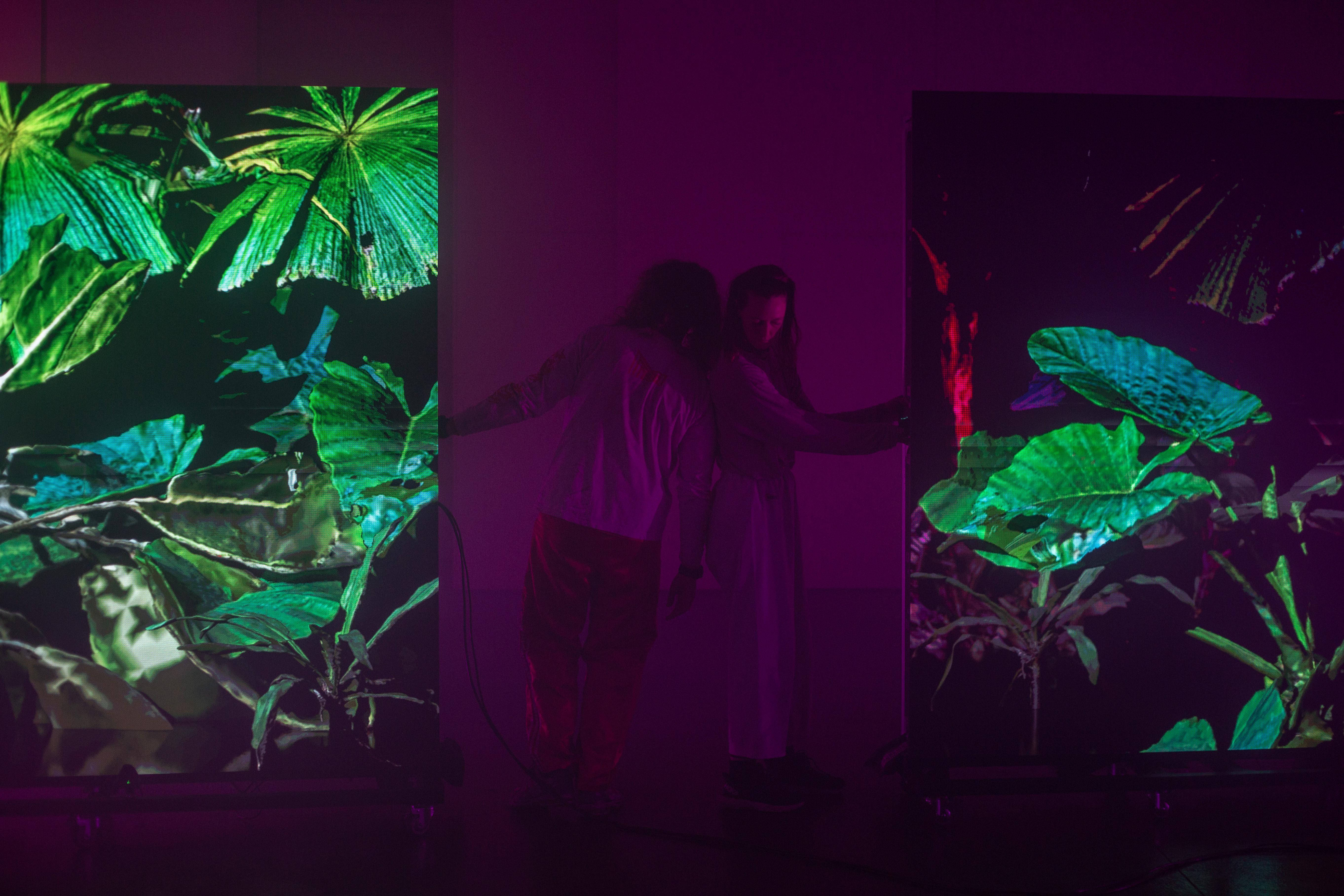
Development Minimax residency at Chunky Move, May 2023
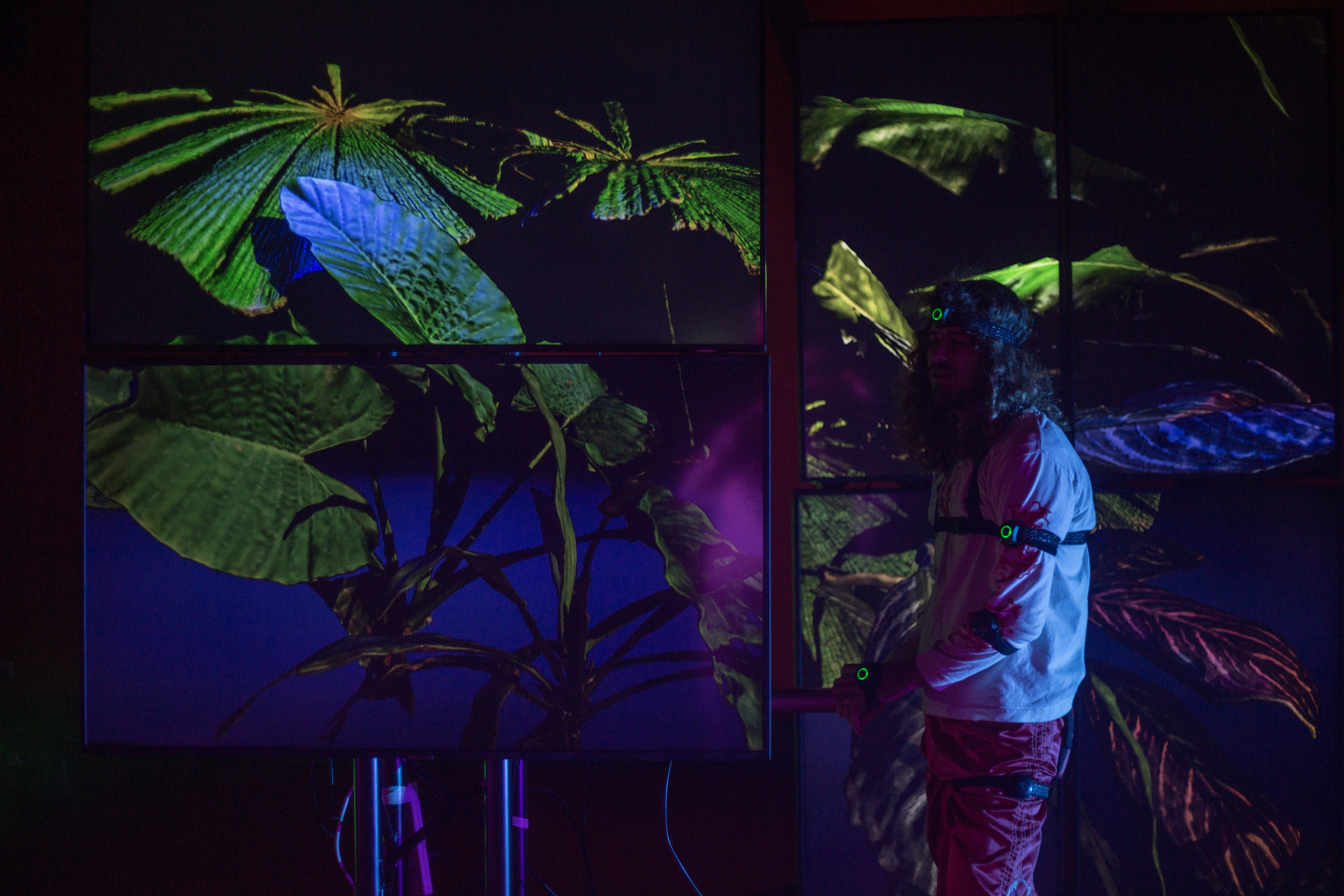
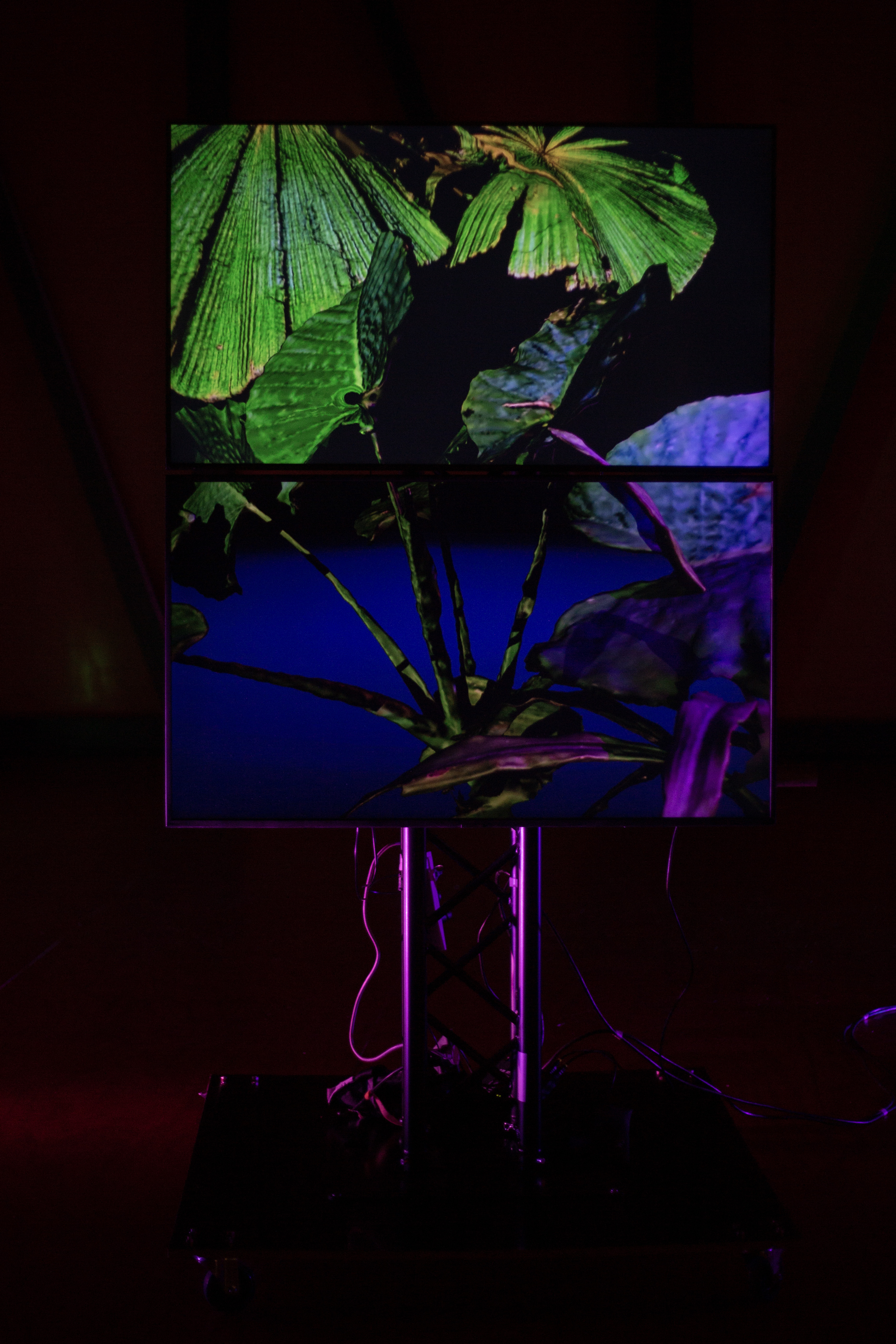

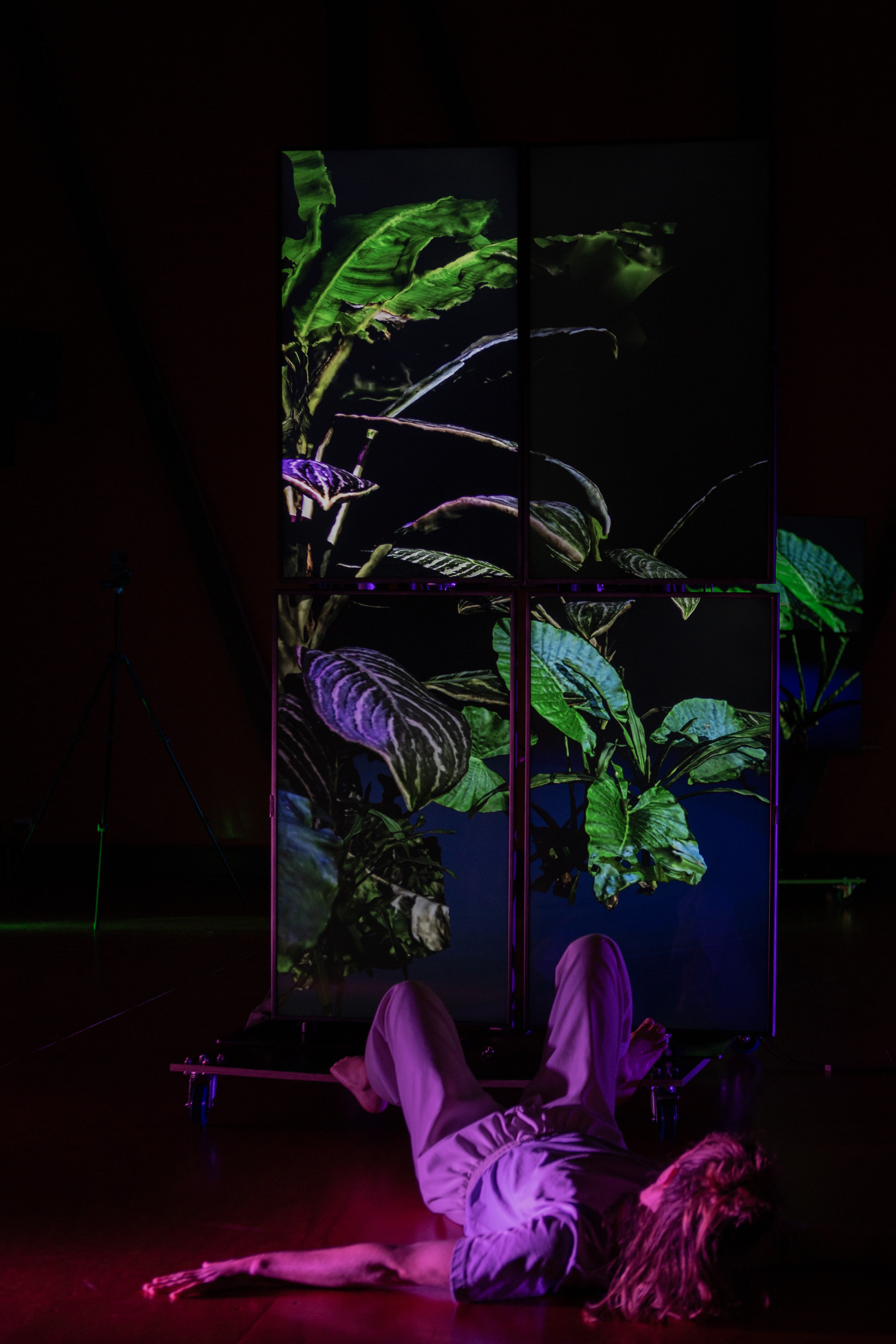
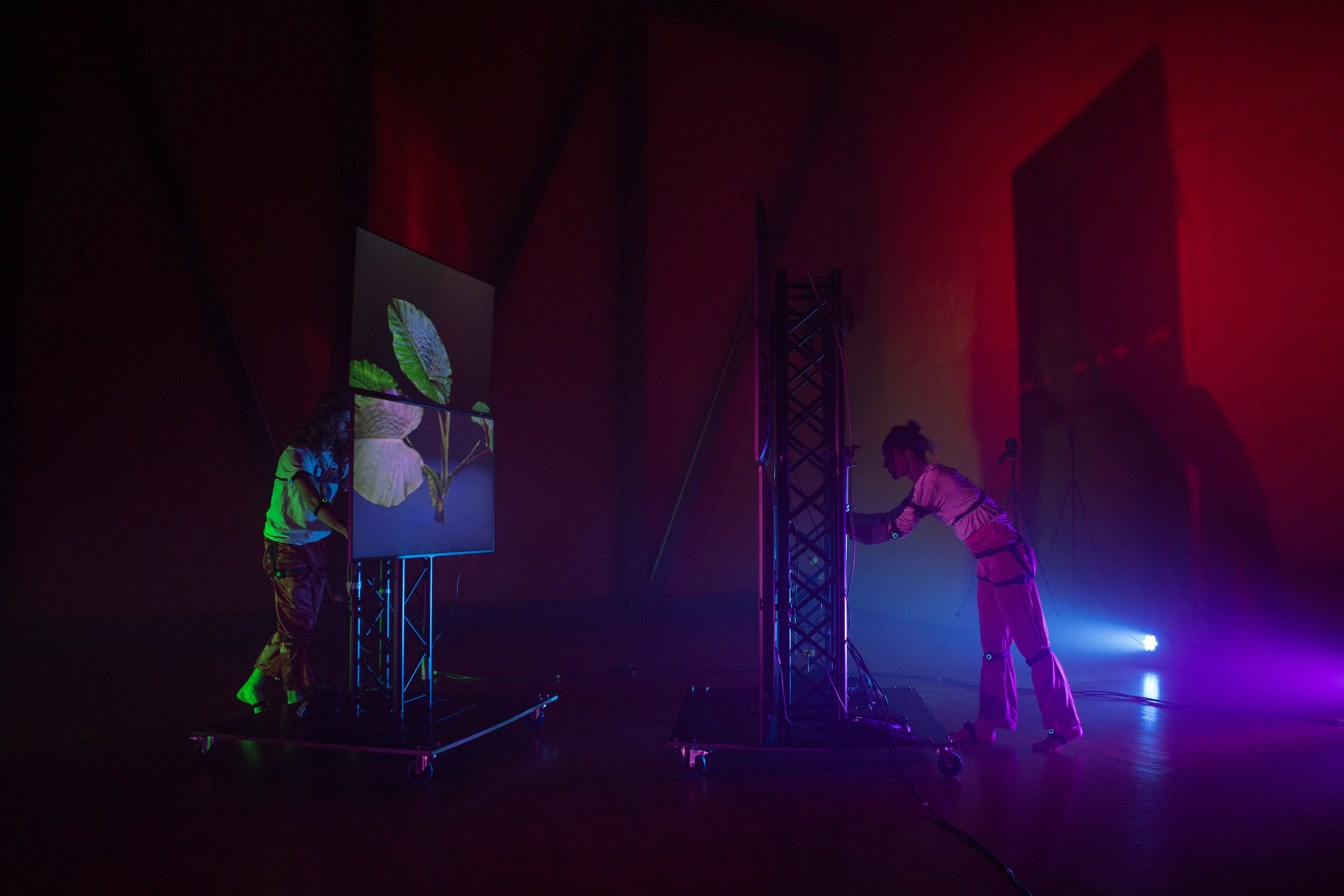
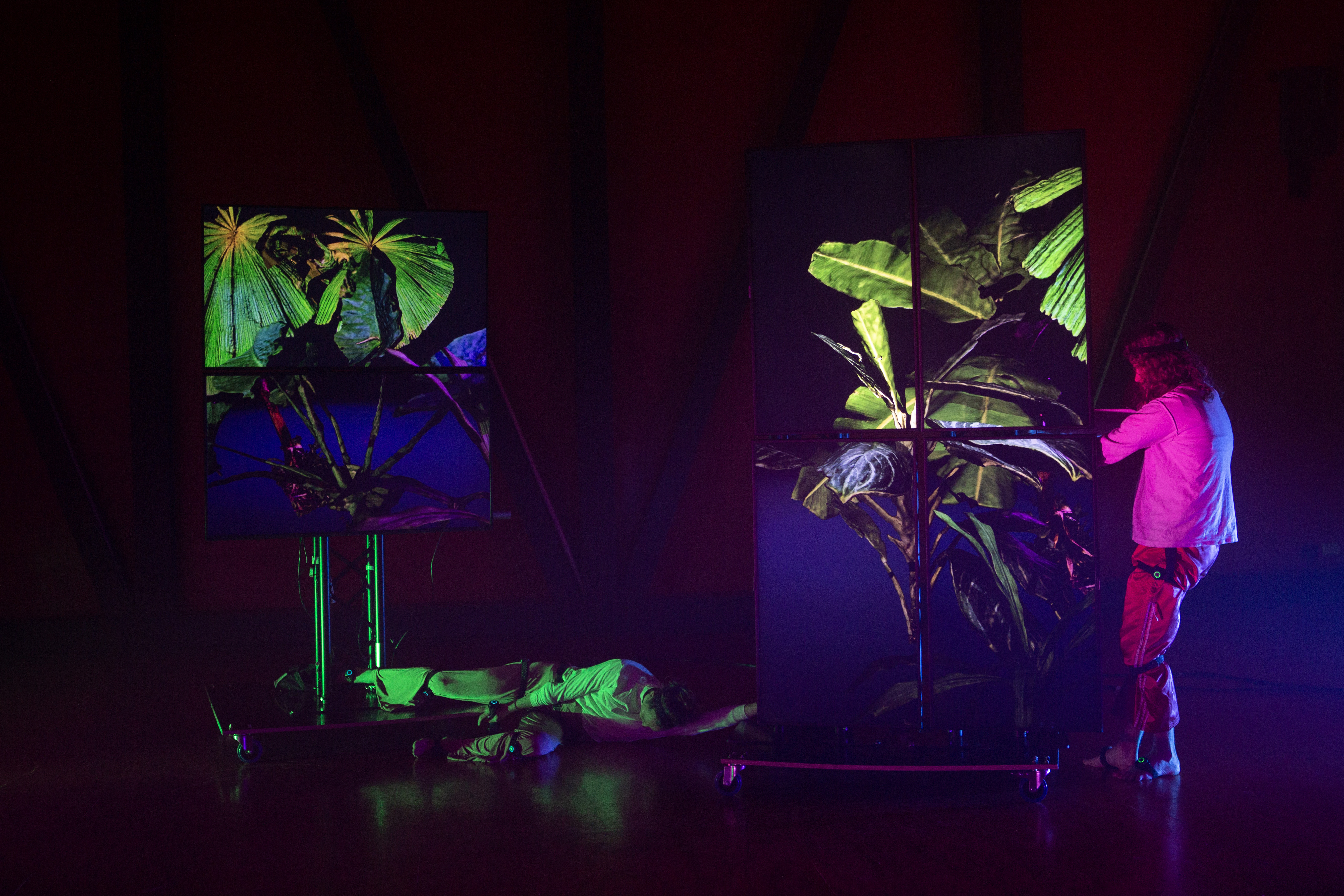
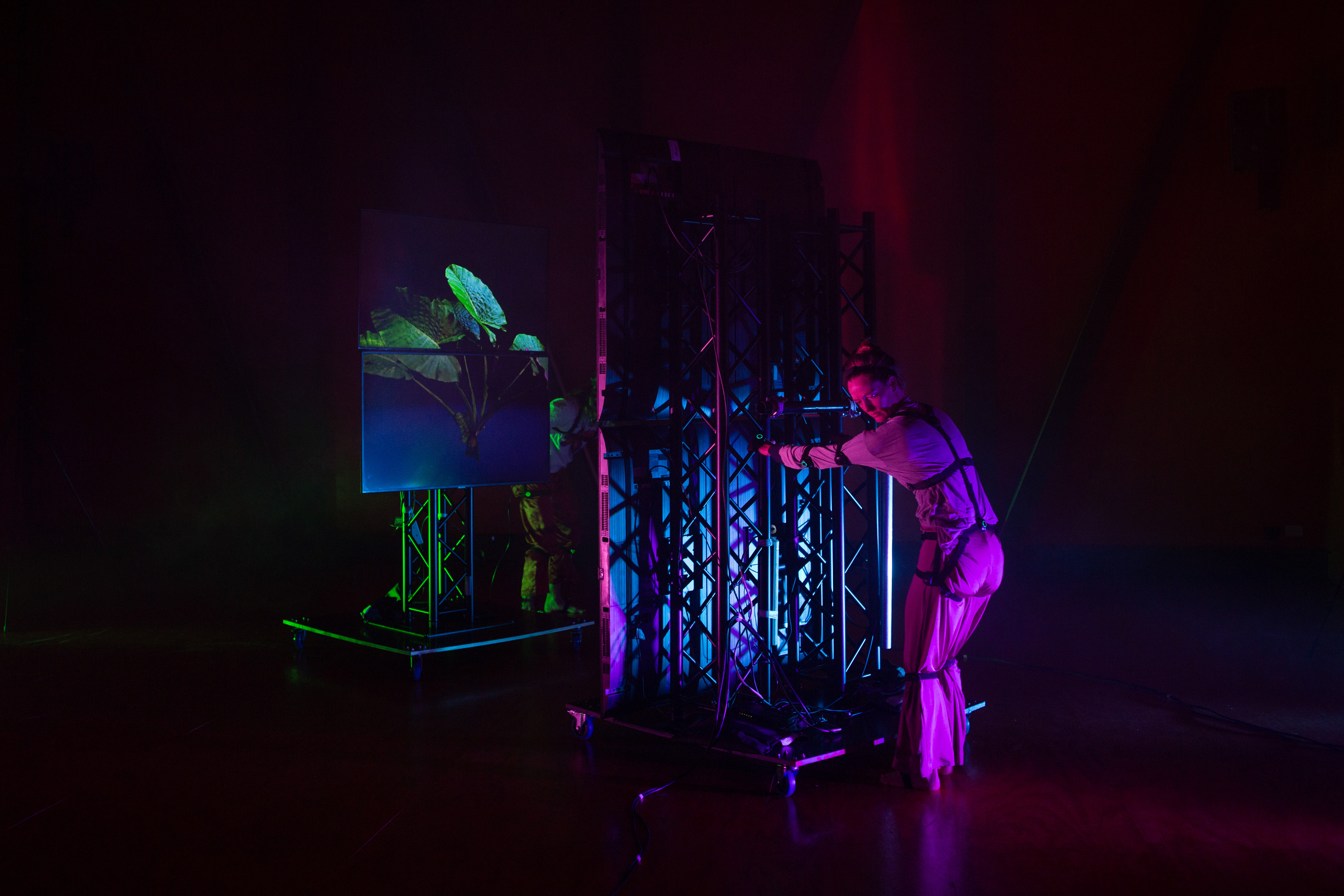
Devlopment at Platform Arts January 2023


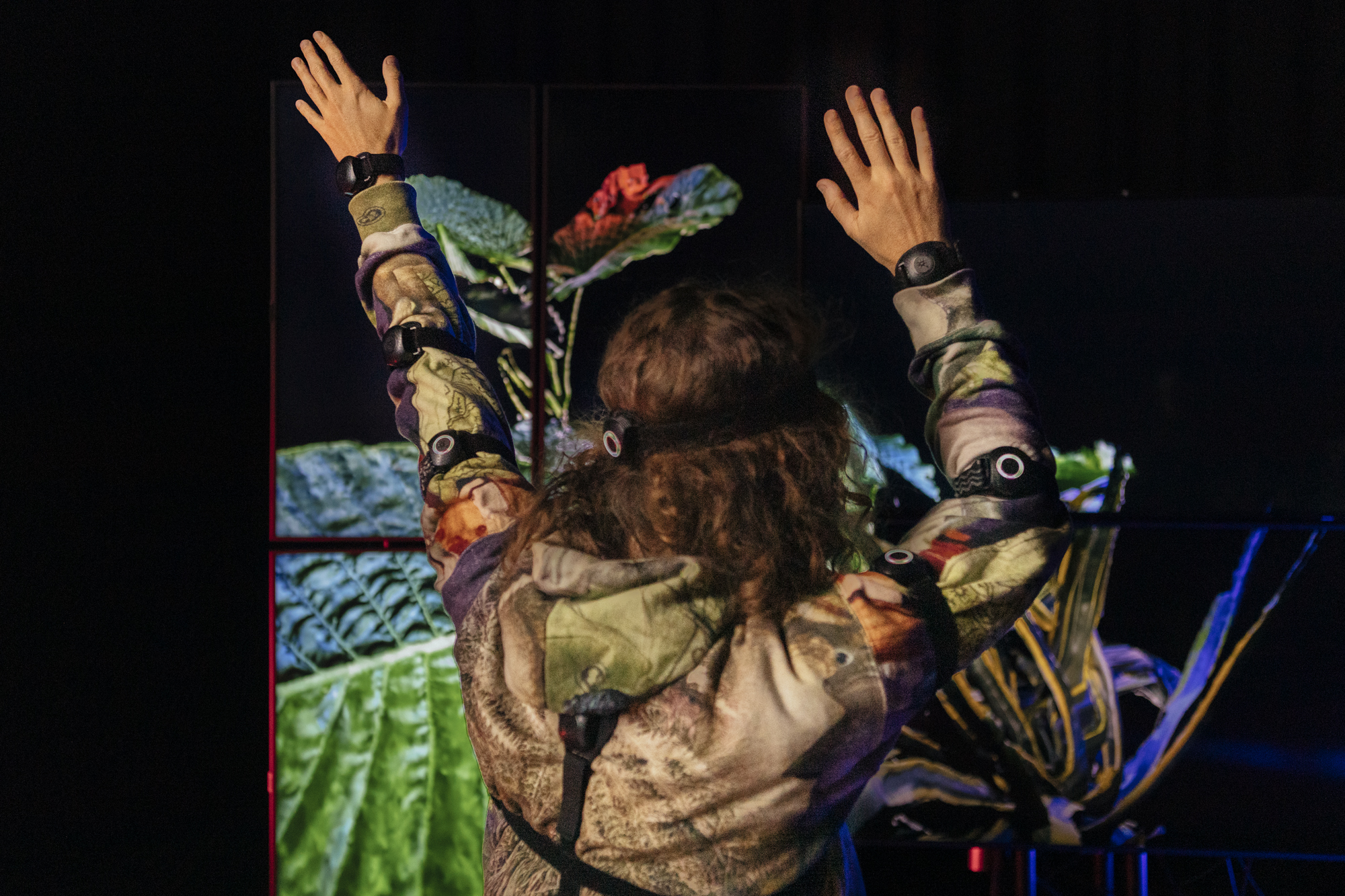
Development Boyde Residency City of Melbourne 2022


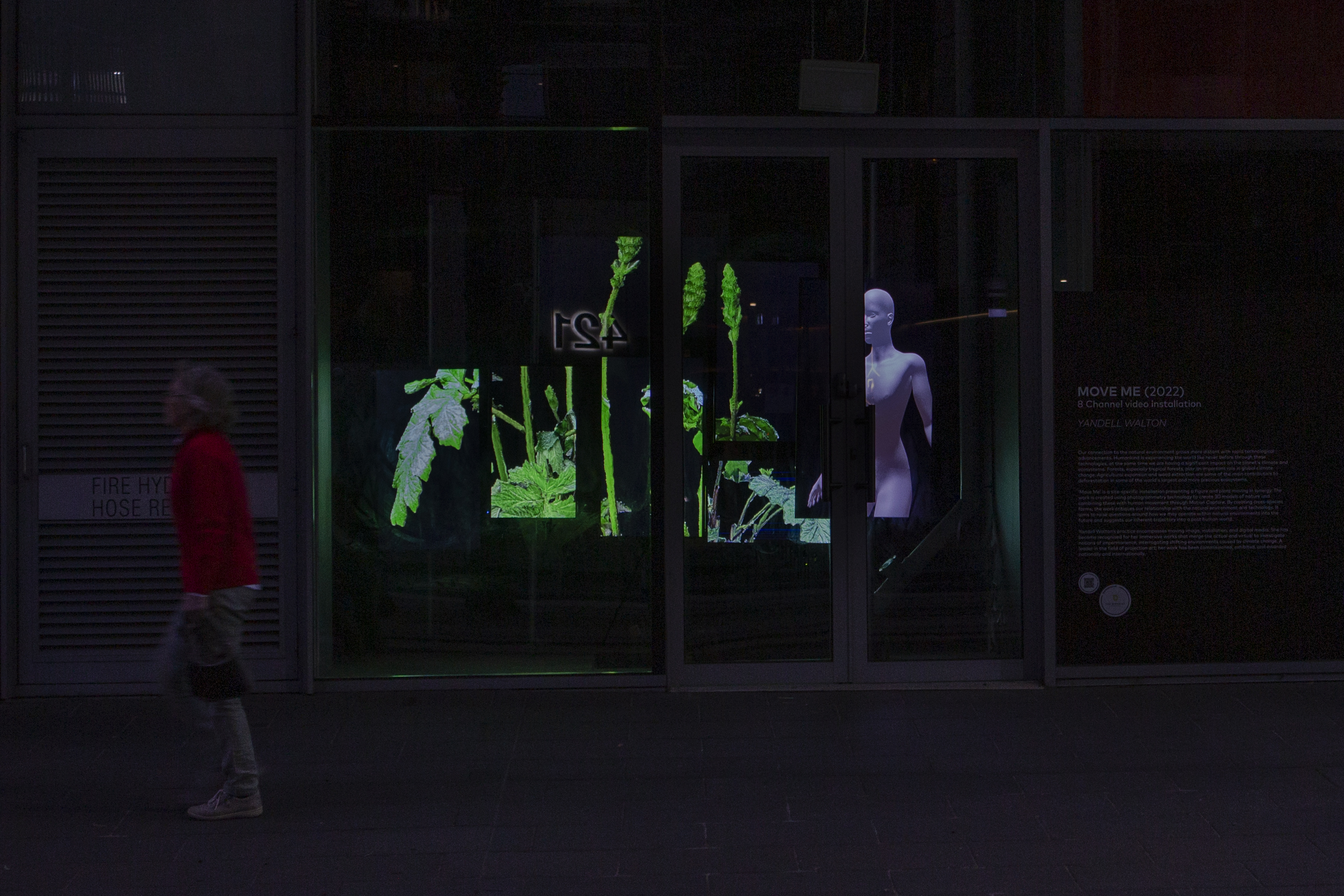
Using Motion Capture data this work animates the avatar and the plant with the same data

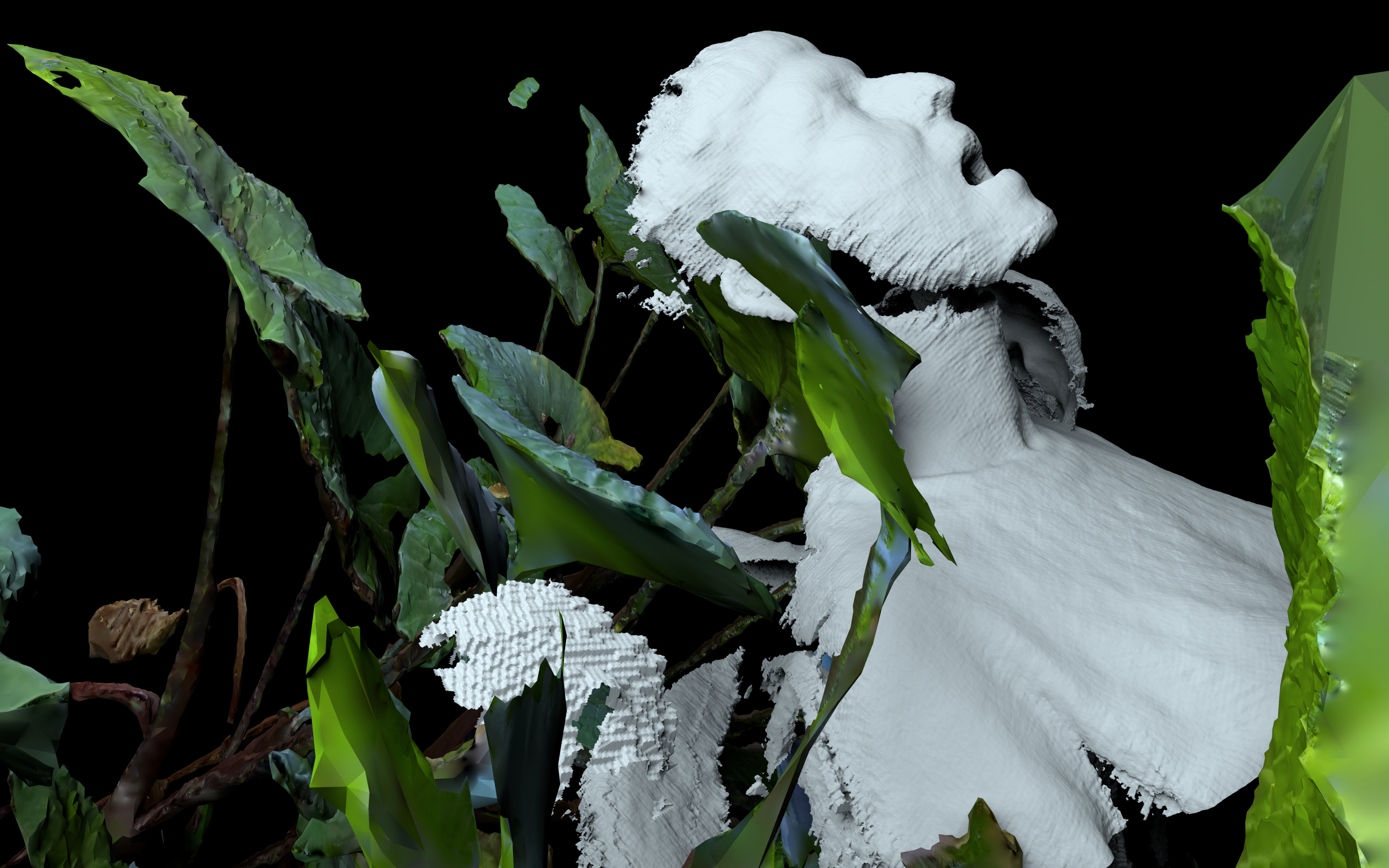

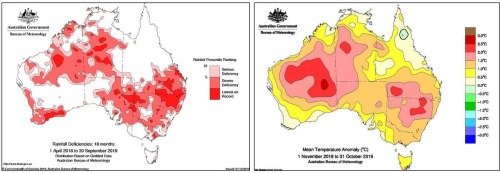
First volumetric scan, image set taken in studio with natural light. Volumetric scan not enough detail due to low light

Among Australia’s terrestrial ecosystems, some of the most vulnerable to climate change are:
- alpine systems as habitats shift to higher elevations and shrink in area;
- tropical and subtropical rainforests due to warming temperatures (moderated or intensified by rainfall changes);
- coastal wetlands affected by sea-level rise and saline intrusion;
-
inland ecosystems dependent
on freshwater and groundwater that are affected by changed rainfall patterns;
- tropical savannahs affected by changes in the frequency and severity of bushfires.


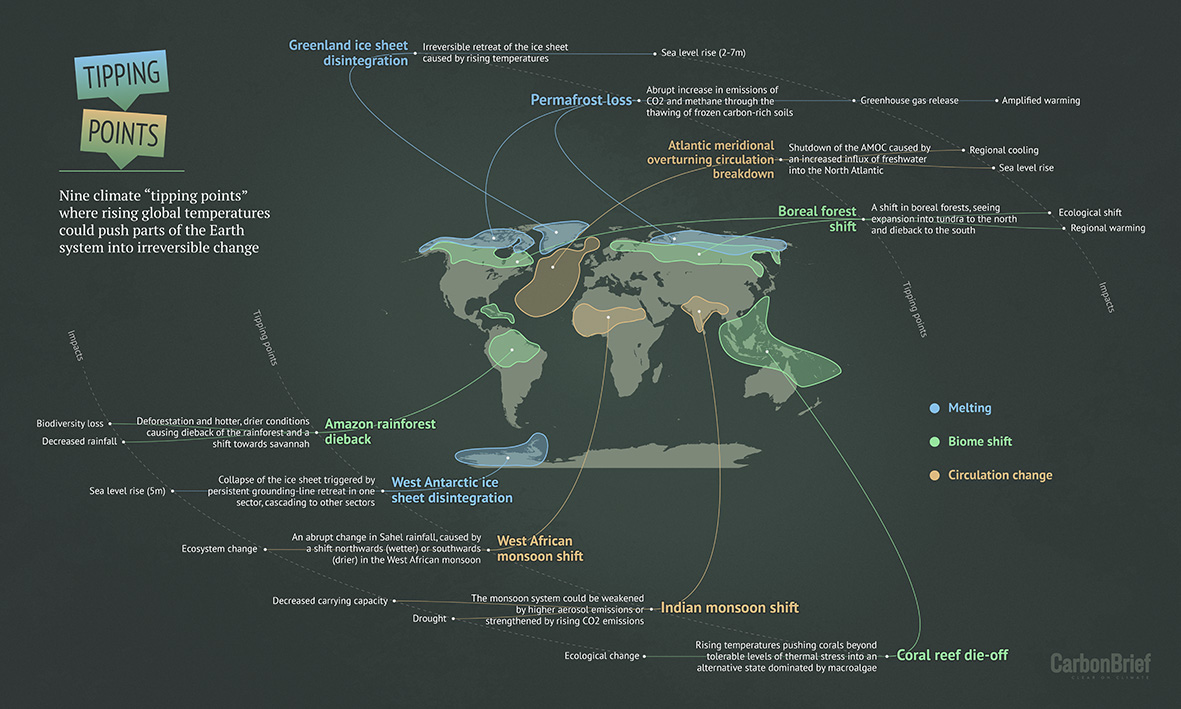
Human activities are reshaping our planet in profound ways. We have fundamentally altered the physical, chemical and biological systems of the planet on which we and all other organisms depend.
The changes that have occurred in the last 50 to 200 years have led scientists to propose a new geologic epoch, called the Anthropocene.
In the past 60 years in particular, these human impacts have unfolded at an unprecedented rate and scale. This period is sometimes known as the Great Acceleration. Carbon dioxide emissions, global warming, ocean acidification, habitat destruction, extinction and widescale natural resource extraction are all signs that we have significantly modified our planet.
It is clear that our climate is no longer stable and is beginning to warm rapidly. Scientists now agree that human activity, rather than any natural progress, is the primary cause of the accelerated global warming. Agriculture, urbanisation, deforestation and pollution have caused extraordinary changes on Earth.
“If we want to use forests as a weapon in the
fight against climate change, then we must allow them to grow old, which is
exactly what large conservation groups are asking us to do.”
“When you know that trees experience pain and have memories and that tree parents live together with their children, then you can no longer just chop them down and disrupt their lives with larger machines.”
“An organism that is too greedy and takes too much without giving anything in return destroys what it needs for life.”
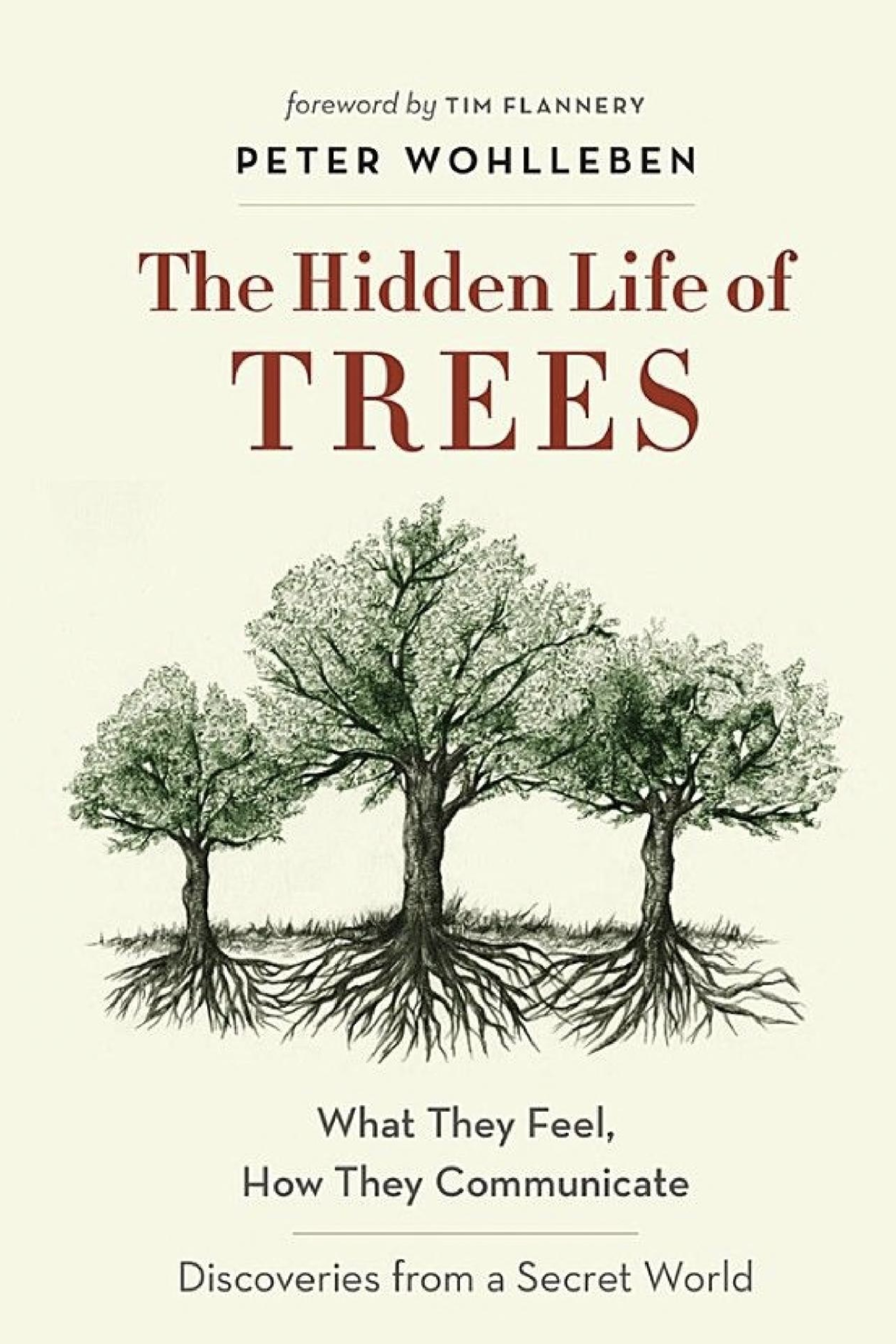
― Peter Wohlleben, The Hidden Life of Trees: What They Feel, How They Communicate – Discoveries from a Secret World
“When you know that trees experience pain and have memories and that tree parents live together with their children, then you can no longer just chop them down and disrupt their lives with larger machines.”
“An organism that is too greedy and takes too much without giving anything in return destroys what it needs for life.”
― Peter Wohlleben, The Hidden Life of Trees: What They Feel, How They Communicate – Discoveries from a Secret World